
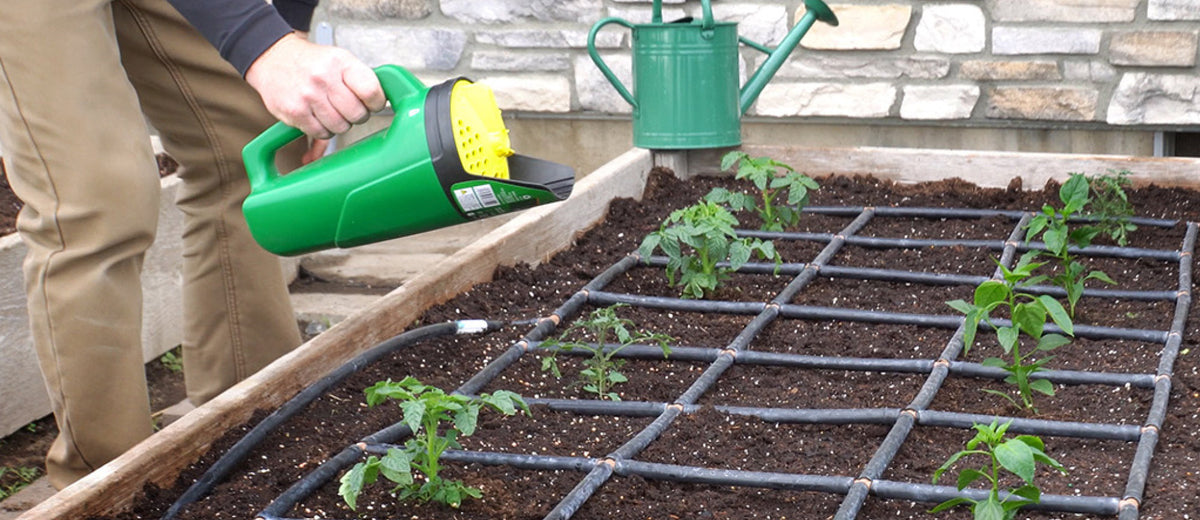
Once you have your soil test results in hand, it's time to put them to work. Amending and fertilizing are where your soil test turns into healthier plants and more blooms. Here's what to know:
- Timing
- Adjusting pH
- Gypsum for high sodium
- Following your fertilizer recommendations
- How to fertilize
This article is part of our Beginners Flower Garden Guide
Timing: When to Amend and Fertilize
The best time to amend your soil or adjust pH is before planting or early in the season. You can also add amendments in the fall. The same is true for your first fertilizer application, although fertilizing will continue regularly through the growing season.
Adjusting Soil pH
If your soil pH is too high or too low, or if you're growing acid-loving plants such as azaleas or rhododendrons, you may benefit from adjusting your soil pH.
- To raise pH (make soil more basic): use lime, either calcitic or dolomitic.
- To lower pH (make soil more acidic): use elemental sulfur.
Your MySoil test will guide you to the correct product(s) for your specific soil. For a great demonstration, check out How to Correct Your Soil pH from SoiLab on YouTube.
Gypsum for High Sodium Soils
If your soil test shows excessively high sodium levels, your MySoil results will recommend gypsum. Your flowers will benefit from moving that sodium out of the rootzone.
1. Add the gypsum
2. Incorporate it into the soil
3. Irrigate in excess to move the sodium below the rootzone of your plants
SoiLab has another helpful video showing gypsum in action: Gypsum: The Secret to Explosive Plant Growth in High Sodium Soil!
Follow Your Fertilizer Recommendations
Your MySoil test recommendations tell you exactly how much fertilizer to apply. All you need to do is input your square footage. No guesswork, no over-application.
How to Fertilize Your Flowers
Tools for Applying Fertilizer
How you apply fertilizer can vary depending on the size of your garden or bed, but I really like using a shaker applicator for granular products. It makes even distribution easy in beds of any size.

Fertilizing Annuals
There are many different and successful philosophies here, but I like to add fertilizer at planting and then again monthly in small amounts for annuals. This helps maintain steady plant growth without a flush of growth.
- First application: Spread fertilizer across the soil surface of the entire container, bed, or garden, then incorporate it into the top couple of inches. It will slowly release nutrients that are, or will become, plant available.
- Follow-up applications: After planting, reapply the same fertilizer directly at the base of the plant every 4–6 weeks.
Fertilizing Perennials
For perennials, I like to fertilize in the spring and again mid-season. Some successful gardeners also add a third application in the fall.
A Word of Caution About Nitrogen
Too much nitrogen can actually encourage leafy, vegetative growth and delay flowering. That's why multiple fertilizer applications in smaller amounts are preferred over one big dose.
Using Soluble or Liquid Fertilizers
Using a soluble or liquid product? Simply add it to your watering can, add water, and distribute it evenly across the whole bed or on either side of your plants.
Want to see it in action? Watch this video from the MySoil team: How To Fertilize a Garden.
Feed Your Soil, Feed Your Flowers
Amend early, follow your soil test, and fertilize in smaller, regular doses. That simple approach will keep your flowers growing steadily and blooming beautifully all season long.
Next up: The Benefits of Adding Organic Matter to Your Flower Garden
Read the full guide: Beginners Flower Garden Guide
Share:
How to Plant Flowers: Hole Depth, Width, and a Step-by-Step Planting Process
Soil Testing for Flower Gardens: Your Insurance Policy for Success