
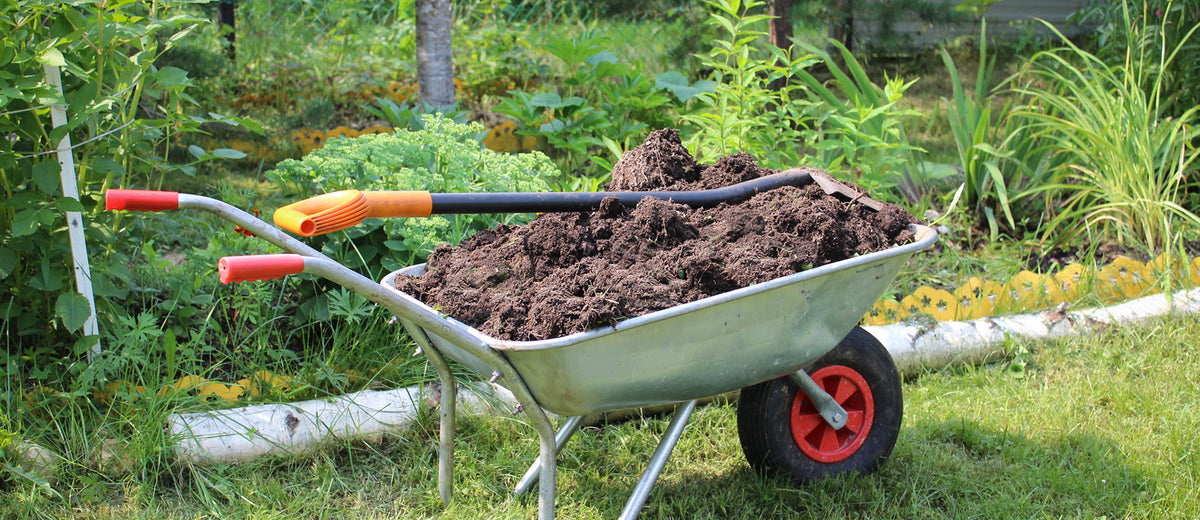
If I could recommend just one thing to improve almost any flower garden, it would be adding organic matter. I can think of only rare instances when it wouldn't be recommended. In this article, we'll cover:
- The benefits of organic matter
- What types to use
- Concerns and things to watch for
This article is part of our Beginners Flower Garden Guide
The Benefits of Organic Matter
The benefits of adding organic matter are numerous. Here are some key ways it helps your flowers:
- Provides nutrients as it breaks down
- Improves soil structure
- Enhances your soil's ability to hold water
- Enhances drainage and aeration
- Enhances your soil's ability to hold nutrients in the rootzone
- Increases life in the soil, from worms to beneficial microorganisms
- Sequesters carbon
- Likely reduces soil diseases and pests
- Enhances soil temperature regulation
- Reduces soil compaction
That's a lot of return for something as simple as compost.

When to Add Organic Matter
It's beneficial to liberally add organic matter:
- In the fall
- At the beginning of each season
- Before planting
What Type of Organic Matter Should You Use?
Great options include:
- Compost
- Shredded leaves
- Vermicompost (worm castings)
- Biochar
- Very well-composted manure
You can add organic matter as a mulch on the soil surface to help suppress weeds, or incorporate it directly into the top several inches of soil.
Keep Woody Mulch Out of Planting Areas
Avoid adding bark mulch or wood chips directly into the garden where plants are growing. As woody material breaks down, it ties up nitrogen in the soil, taking it away from your flowers. Woody mulch does work great between beds or on walkways, where it helps suppress weeds and retain moisture.

Concerns and Things to Watch For
Some organic inputs can have high salt levels. If you start to see a white film on the soil surface, it's likely salt left behind as water evaporated.
If you see this, irrigate heavily to flush, or leach, the salts below the rootzone. Just be sure not to leach immediately after a fertilizer application, or you may wash away the nutrients your flowers need.
Wondering what's in your compost? You can test it with a MySoil Test Kit just like you would your garden soil.
Build Your Soil, Season After Season
Organic matter isn't a one-time fix. It's an ongoing investment in your soil. Add it each season, and you'll see healthier soil structure, better water management, and stronger flowers year after year.
Next up: How to Plant Flowers: Depth, Width, and Step-by-Step Planting
Read the full guide: Beginners Flower Garden Guide
Share:
Soil Testing for Flower Gardens: Your Insurance Policy for Success
How to Control Weeds in Your Flower Garden (and What They Say About Your Soil)