
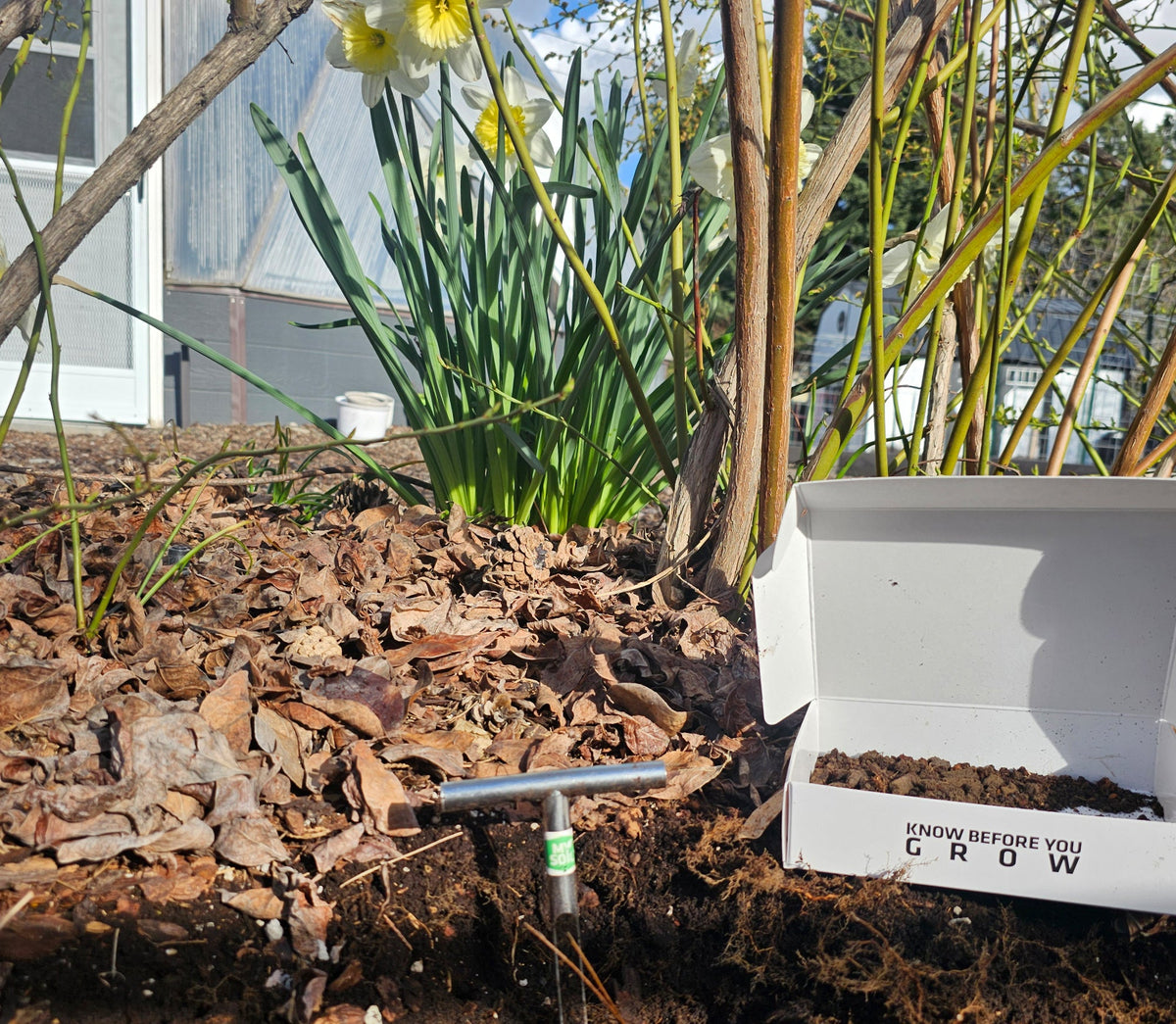
If there's one step beginners skip that I wish they wouldn't, it's soil testing. Think of a soil test as an insurance policy for success. Instead of guessing what your flowers need, you'll know exactly where your soil stands and what, if anything, to add.
This article covers:
- Why soil testing matters
- pH and essential nutrient levels
- What to do if values are high
- Getting vetted fertilizer and amendment recommendations
This article is part of our Beginners Flower Garden Guide.
Know Before You Grow
The MySoil Test Kit is perfect for beginner and veteran gardeners alike. It measures your soil's pH and the levels of available nutrients, then recommends vetted fertilizer and amendment products in the amounts you need for your garden area.
Turnaround time for lab results is 6–8 days from when you put your soil sample and prepaid mailer in your mailbox. Not sure how to collect a sample? Here's our step-by-step guide on how to take a soil sample for accurate lawn and garden testing

Reading Your Results: Low, Optimal, and High
On a typical soil test report, you'll see values that are low, optimal, and high. Here's how to think about each.
Low Values
Take nitrogen as an example. If nitrogen is low, your report may recommend a product such as a 13-0-0 or 46-0-0 (N-P-K) fertilizer, in an amount that will bring nitrogen up to maximize plant health and nutrient density.
What If Values Are High?
You'll notice that the second two numbers on those nitrogen fertilizers are "0." That's because, in this example, phosphorus (P) and potassium (K) are already present in amounts beyond what the plants need.
In a case like this, there's nothing to worry about. Your plants will bring those levels down over time as they absorb the nutrients, and you'll remove some as you cut flowers and compost your annuals at the end of the season. The key is simply not to add more of what you already have plenty of, which is exactly why testing first saves you money and protects your soil.
Understanding the Nutrients on Your Report
Primary Nutrients: N, P, and K
Nitrogen, phosphorus, and potassium are the three primary nutrients, and they're what's represented on a fertilizer bag as the numeric analysis (N-P-K). They're also the most likely to limit plant health, so focus on them first.
Secondary Macronutrients: Sulfur, Calcium, and Magnesium
Sulfur, calcium, and magnesium are the secondary macronutrients, essentially your second tier of focus.
- Sulfur is the one most often low. Read your fertilizer label, as many fertilizers include sulfur. If yours doesn't, you can add sulfur with a different product as a second application at the same time.
- Calcium (Ca) and magnesium (Mg) carry the same tier of importance but are low less often than sulfur and are also commonly found in typical fertilizers. Be sure to read the label.
Micronutrients: The Icing on the Cake
You'll also see micronutrients on your report: iron (Fe), manganese (Mn), zinc (Zn), copper (Cu), and boron (B). Although essential, additions of these nutrients are considered "icing on the cake," and they may be delivered in high enough amounts with your compost.
Curious about what's in your compost? You can run a MySoil test on your compost too. And if you do need micronutrients, the MySoil team recommends products for those as well. Just click "View Your Custom Recommendations" in your soil test report.

Test, Then Feed
A soil test takes the guesswork out of fertilizing. You'll avoid over-applying nutrients you already have, correct the ones you're missing, and give your flowers the best possible start. Know before you grow for the healthiest soil and plants.
Next up: Amending and Fertilizing Your Flower Garden: Timing, pH, and How to Apply
Read the full guide: Beginners Flower Garden Guide
Share:
Amending and Fertilizing Your Flower Garden: Timing, pH, Gypsum, and How to Apply
Adding Organic Matter to Your Flower Garden: Benefits, Best Types, and What to Watch For