
I, and likely you too, will come to have a love-hate (or is it hate-love?) relationship with weeds. In my experience, this is where much of your garden time will be spent. Let's look at:
- Why control weeds?
- How to control weeds
This article is part of our Beginners Flower Garden Guide.
Why Control Weeds?
Weeds don't help your flowers grow. In fact, they directly compete with your plants for water, nutrients, and sunlight.
Some weeds go a step further and have toxic, or allelopathic, effects on nearby plants. Spotted knapweed is one example: it exudes chemicals from its roots that suppress the growth of several other species sharing the same or closely adjacent rootzone.
And beyond plant health, many of us simply like the look of a neat, tidy, clean flower garden.
What Your Weeds Are Telling You
The types of weeds you're seeing can be indicators of your soil's condition:
- Lots of clover, medic, and oxalis? Your soil is likely low in nitrogen.
- Lots of broadleaf and buckhorn plantain? Your soil is likely a bit too compacted.
There are some great articles and books on weeds as indicator species if you'd like to learn more. And to confirm what your weeds are hinting at, a MySoil Test Kit will give you the full picture.
How to Control Weeds
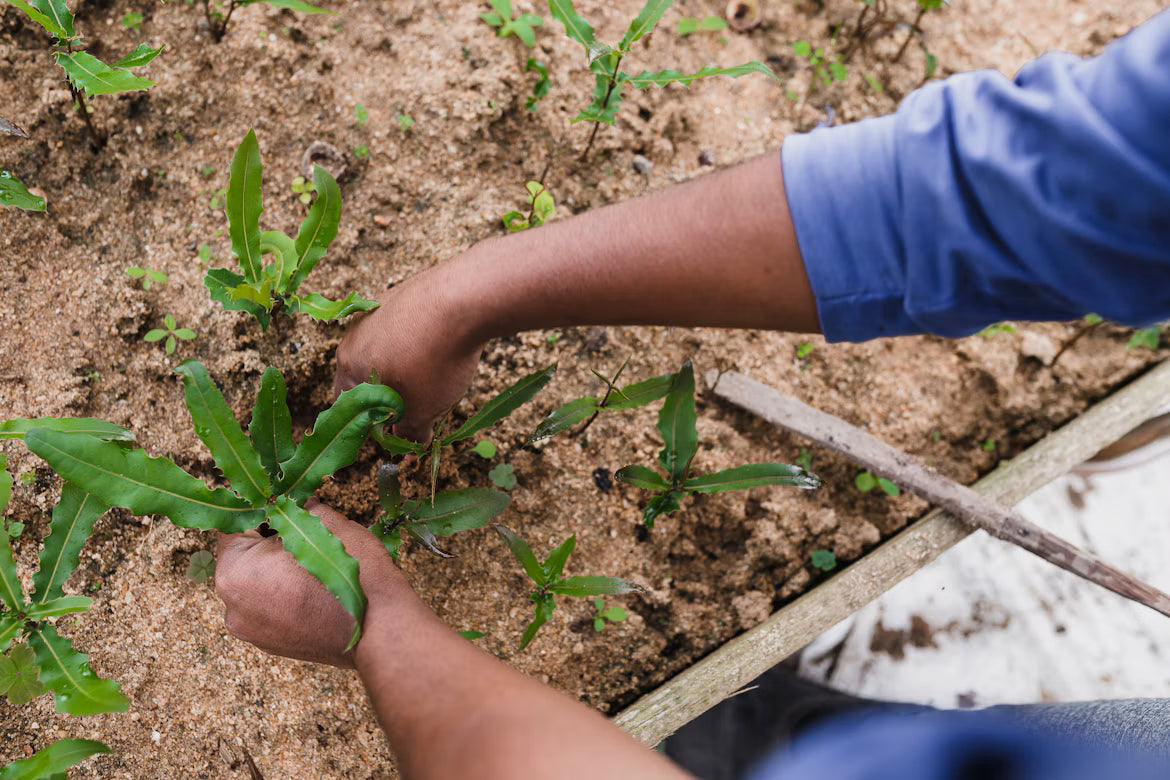
Hand Pulling: Grandpa's Rule
My Grandpa had great advice that's stood the test of time, and I still adhere to it at a minimum:
"Pulling a bucket full a day will keep the weeds at bay."
Hand pulling can take time, but there's an often-overlooked benefit: weeds that aren't producing seed make a great "green," or high-nitrogen, addition to your compost pile. At my place, I have mostly leaves and woody, brown material from our many mature trees, so my compost pile is always craving green additions to really get things breaking down.
Quick tip: Hand pull or hoe just after a rain or irrigation cycle. Moist soil makes weed removal much easier.
Mulching
Mulching is a great option. Many gardeners lay a layer of cardboard against the soil surface, then add mulch on top to smother weeds and keep new ones from germinating.
Drip Irrigation
Drip irrigation waters only your flowers, not the soil in between, which helps your plants be more competitive and gives weeds less to work with.
Hoes, Light Tilling, and Flame
Hoes and various other hand tools, light tilling, and flame weeders are all effective options for keeping weeds down between plants.
Herbicides
Although many gardeners avoid them, you may opt to use pre-emergent or post-emergent herbicides. If you go this route, closely follow the label to avoid damaging the plants you want to grow.
Diligence Is Key
Whichever method you choose, consistency matters more than anything. A few minutes of weeding regularly beats a full weekend of catch-up, and your flowers will thank you for it.
Next up: Deadheading Flowers: Why and How to Do It
Read the full guide: Beginners Flower Garden Guide
Share:
Adding Organic Matter to Your Flower Garden: Benefits, Best Types, and What to Watch For
Deadheading Flowers: Why It Matters and How to Do It