
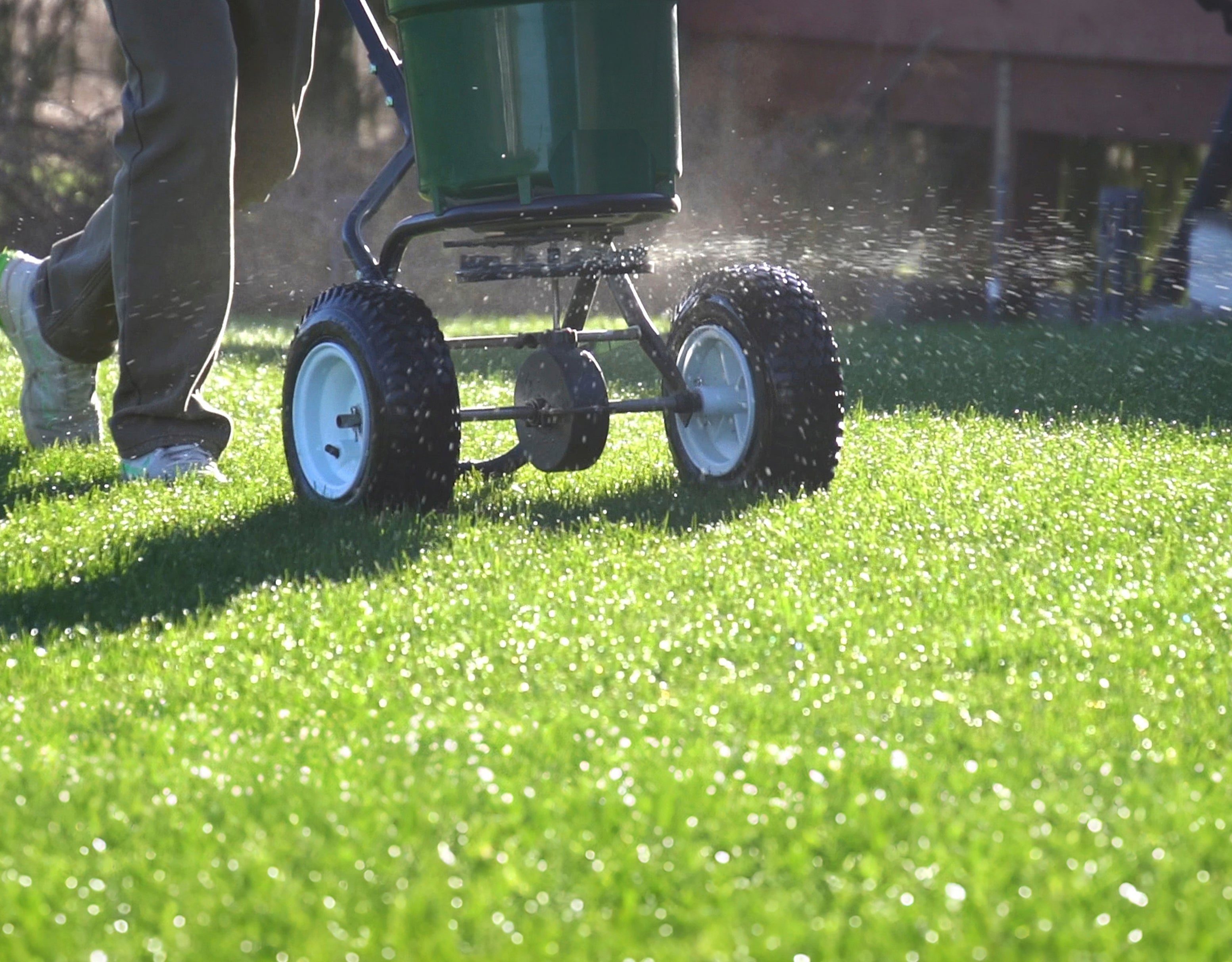
If your goal is a thick, clean, weed-free lawn heading into summer, spring pre-emergent herbicides should be a core part of your lawn care program. Before we try to kill visible weeds, it helps to understand how they grow. Many of the worst lawn invaders in spring and summer are annual weeds that germinate from seed once soils warm, live one season, then die after setting seed for the next year. Summer annual grasses like crabgrass, goosegrass, and foxtail follow this pattern and are easiest to control at germination, not after they are established.
Pre-emergent herbicides are designed to prevent the establishment of many weeds by targeting that narrow window as seeds sprout. They work by forming a barrier in the top layer of soil that affects susceptible species listed on each product label as new roots or shoots contact the treated zone. Because this barrier stops weeds before you ever see them, properly timed spring pre-emergent applications are one of the most powerful tools in your lawn maintenance program for reducing crabgrass and other summer weeds.

When to apply spring pre-emergent
Apply spring pre-emergent such as Dimension® (active ingredient: dithiopyr) or products containing prodiamine as the active ingredient when soil temperatures at a 0–2 inch depth consistently reach 50–55°F and before they push into the 60–70°F range. This is typically in early to mid-spring depending on your region, but soil temperature—not the calendar—is what matters. Crabgrass and many other summer annual weeds begin to germinate once soil temperatures reach roughly 53–55°F, and as much as 75% of crabgrass germination occurs as soils warm into the 60–70°F band. I often start scouting for crabgrass germinating in cracks in the asphalt as an early indicator of when to anticipate it germinating in lawns.

Because pre-emergent herbicides must be in place before or right as germination begins, this 50–55°F soil temperature window is critical. Waiting until after soil temperatures are well into the 60s means many weed seeds may have already emerged, and traditional pre-emergents (with the exception of the early post-emergent activity you get from dithiopyr on young crabgrass plants) will not control those escapes. Regardless of which product you choose, anchoring your timing to soil temperature keeps your barrier active when it matters most for controlling crabgrass, goosegrass, foxtail, and other summer annual weeds. You can monitor soil temperature, and even get notifications of when to apply, using the MySoil Grow app. Download it here.
Key target weeds for spring pre-emergent applications include:
· Crabgrass (Digitaria spp.): A coarse-textured summer annual grass that invades thin or stressed turf and spreads aggressively once established.
· Goosegrass (Eleusine indica): A tough, mat-forming grass that germinates slightly later than crabgrass as soils warm a bit more.
· Foxtails and other summer annual grasses: Species that germinate across late spring into early summer, often in full-sun, compacted, or drought-stressed areas.
Why this spring timing matters
Timing spring pre-emergent at the 50–55°F soil threshold ensures the herbicide barrier is fully active before summer annual weeds begin to germinate in bulk. If you wait until soil temperatures have already climbed into the 60–70°F range, a large portion of the crabgrass and other summer annual seedbank may have sprouted, and those seedlings are much harder to manage with pre-emergent products alone. Like in fall, these products gradually break down in the soil over many weeks after application; full efficacy typically spans a 5–12 week window depending on the active ingredient, rate, and environmental conditions.
Properly timed spring pre-emergent applications create a chemical barrier at or just before the moment weed seeds are starting to sprout, providing season-long control when conditions are favorable. As germinating seedlings extend roots or shoots into this treated layer, the herbicide interferes with cell division and root or shoot growth, causing death of the young plant before it can emerge and become visible in the lawn. Stopping summer weeds in spring leads to a cleaner, denser turf canopy through summer, reduces competition for water and nutrients, and minimizes your reliance on post-emergent herbicides later in the season.
To dial in your timing, check your MySoil dashboard or the MySoil Grow app for your current soil temperature or use a soil thermometer at a 2-inch depth to monitor actual lawn soil conditions instead of relying on air temperatures or calendar dates, which can be misleading year to year. Regions or seasons that warm up earlier in spring may require earlier applications, while cooler climates may shift the timing later.

How much and what spreader setting?
Always read the product label in full and follow the specific rates and spreader settings provided for your grass type and region; the label is the legal standard for safe and effective use. The Dimension® label linked below is a good example to review so you can become familiar with rate ranges, split-application options, and turf species tolerances.
Should I use liquid or granular pre-emergent products?
Granular pre-emergents are straightforward to apply with a broadcast spreader and are a popular choice for homeowners, especially on medium to large lawns. They typically offer long shelf life when stored dry, reduce drift risk into landscape beds or hardscapes, and are easy to keep on hand between seasons. Their main limitation is that they rely on timely irrigation or rainfall to move the active ingredient off the granule and into the soil surface; without adequate water soon after application, the barrier may take longer to activate and can provide inconsistent weed control under dry conditions.
Liquid pre-emergent formulations shine when you need quick activation and uniform coverage, which is especially helpful on smaller lawns, irregular shapes, edges, tree rings, and property borders. Once applied correctly, liquid products can establish the barrier rapidly in the soil profile and are often favored in climates where spring rainfall is unpredictable or where irrigation is tightly managed. They reward precise application with quality sprayers but require more skill to avoid skips, overlap, and drift, and leftover mixed solution generally cannot be stored for later use.
Both granular and liquid pre-emergent herbicides can deliver strong season-long weed control when used according to label directions and timed to soil temperature. Many DIYers gravitate toward granular products for simplicity and a more forgiving learning curve, while liquids appeal to those comfortable with sprayers who want more precision and flexibility, or who are targeting specific problem zones. The best choice depends on your lawn size, equipment, comfort level, and how consistent your irrigation or spring rainfall patterns are.
Key tips for spring pre-emergent success
· Do not apply pre-emergent if you are overseeding or establishing new grass from seed, because the same barrier that blocks weed seedlings will also inhibit germination and emergence of desirable turf species.
· Water in granular pre-emergent thoroughly right after application for best results; about one-quarter to one-half inch of irrigation or rainfall is commonly recommended to fully activate most products, unless the label specifies otherwise.
· Mow prior to application and consider bagging clippings so granules can fall cleanly to the soil surface rather than sitting on excess leaf tissue. Some lawn managers even mow slightly shorter than normal before application to improve soil contact.
· Avoid activities that disturb the soil, and therefore your pre-emergent barrier, after application including dethatching, core aeration, slicing, or aggressive raking.
· Wait at least three days before mowing again so you are not displacing granules or disrupting the treated zone just as the barrier is forming at the soil surface.
Apply spring pre-emergent herbicides with the active ingredients of prodiamine or dithiopyr when soil temperatures rise into the 50–55°F range at the 0–2 inch depth and before summer annual weeds like crabgrass begin their main flush of germination. If the label calls for it, be sure to irrigate or allow sufficient rainfall after application to activate the herbicide and create a uniform barrier. Always follow product label directions for rates, timing, and turf safety. This proactive step dramatically reduces summer weed pressure and supports a denser, healthier lawn all season long. Remember to carefully read about seeding and overseeding restrictions following application of pre-emergent on the product label.
Share:
How Frost Damages Your Lawn: Prevention Tips and Soil Testing Advice for Homeowners
What Should I Do To My Lawn After Winter?