
You’ll want to wake it up gently, fix damage, soil test, then feed and protect it as soil warms in early spring.
Once the soil has thawed and the lawn is mostly dry to avoid ruts and compaction, it’s time to start cleaning up what winter left behind. Start by picking up an larger debris or sticks that may have fallen from your trees and shrubs. Next lightly rake to remove matted grass, leaves, and to breakup any crusted areas from winter disease such as snow mold. This light raking will also improve airflow. A metal leaf rake is the perfect tool for this job.

Image 1: Raking a lawn after winter.
For small dead patches, rake out dead material, go over it aggressively with a garden weasel, seed, then topdress with a thin compost layer when soil temps hit mid‑50s. Don’t seed if you plan to use a pre-emergent.
Where snow mold or vole tracks exist, let the lawn grow and fill in after raking; most lawns recover once growth resumes. Heavily damaged zones can be overseeded or resodded once the soil is workable and daytime temps are reliably above freezing.

Image 2: Using a ‘Garden Weasel’ to prepare a bare patch for spring seeding.
Step 3: Aerate and dethatch (if needed)
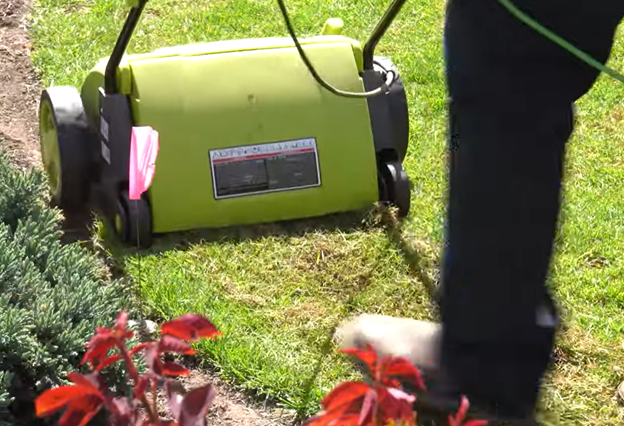
If you have compaction or a spongy thatch layer, plan light dethatching and/or core aeration in early spring when grass is actively growing. Keep dethatching on the lighter side in spring; save aggressive work for early fall when recovery is faster and stress and weed pressure is lower. Mow a bit shorter than normal just before dethatching so equipment can reach the thatch more effectively.

Image 3: Using an electric dethatcher/scarifier to lightly dethatch in spring.
Step 4: Soil test, fertilize and pre‑emergent
Now that the lawn is all cleaned up and dethatched or aerated it’s a great time to soil test. Using your MySoil probe, take 5-7 subsamples from your sampling area, mix them together thoroughly, and then follow the directions with your MySoil test kit to get the sample to the lab for analysis and to receive fertilizer and amendment recommendations and guidance specific to your lawn. Next you will apply the recommended fertilizer and amendments at the recommended rates, then reapply the fertilizer every 5 weeks. If you receive a notification to reapply but are still happy with the appearance of your lawn, simply delay the application for another week and reevaluate. Fertilizing should begin as soil temperatures are averaging ~55 degrees F. If you anticipate crabgrass pressure and haven’t, or aren’t, planning on overseeding then you can apply a pre-emergent ahead of fertilizing, when soil temperatures are averaging 50 degrees F. Learn more about pre-emergent application in this pre-emergent article “When and Why Should I Apply Pre-Emergent to My Lawn This Spring”.

Image 4. MySoil soil test kit and probe getting ready to soil sample in the spring.
It is time to resume mowing once the grass is actively growing, removing no more than one‑third of the blade height per cut to limit stress. For a more in-depth guide into mowing, check out the article “How Often and What Height to Mow – The 1/3 Leaf Surface Rule is The Key to Healthy, Resilient Lawns”. Without going into too much detail, mowing frequently and keeping mower blades sharp are your best bet. This will help to avoid shredding weakened post‑winter turf, which can invite disease and other pests. In regards to irrigation (if you have it), water only as needed to keep soil slightly moist; overwatering cold soils can worsen disease and compaction issues. Here’s another article that answers the question “How Long Should I Water My Lawn?”

Image 5. Mowing the lawn.
We hope that this brief article or checklist gets you excited for spring and helps in the transition between seasons. We have many more tips and guides for more than just lawns at: MySoil Tips & Guides
Share:
When and Why Should I Apply Pre-Emergent to My Lawn This Spring?
Do You Need a Spring Lawn Soil Test? How to Read Results and Choose Fertilizer