
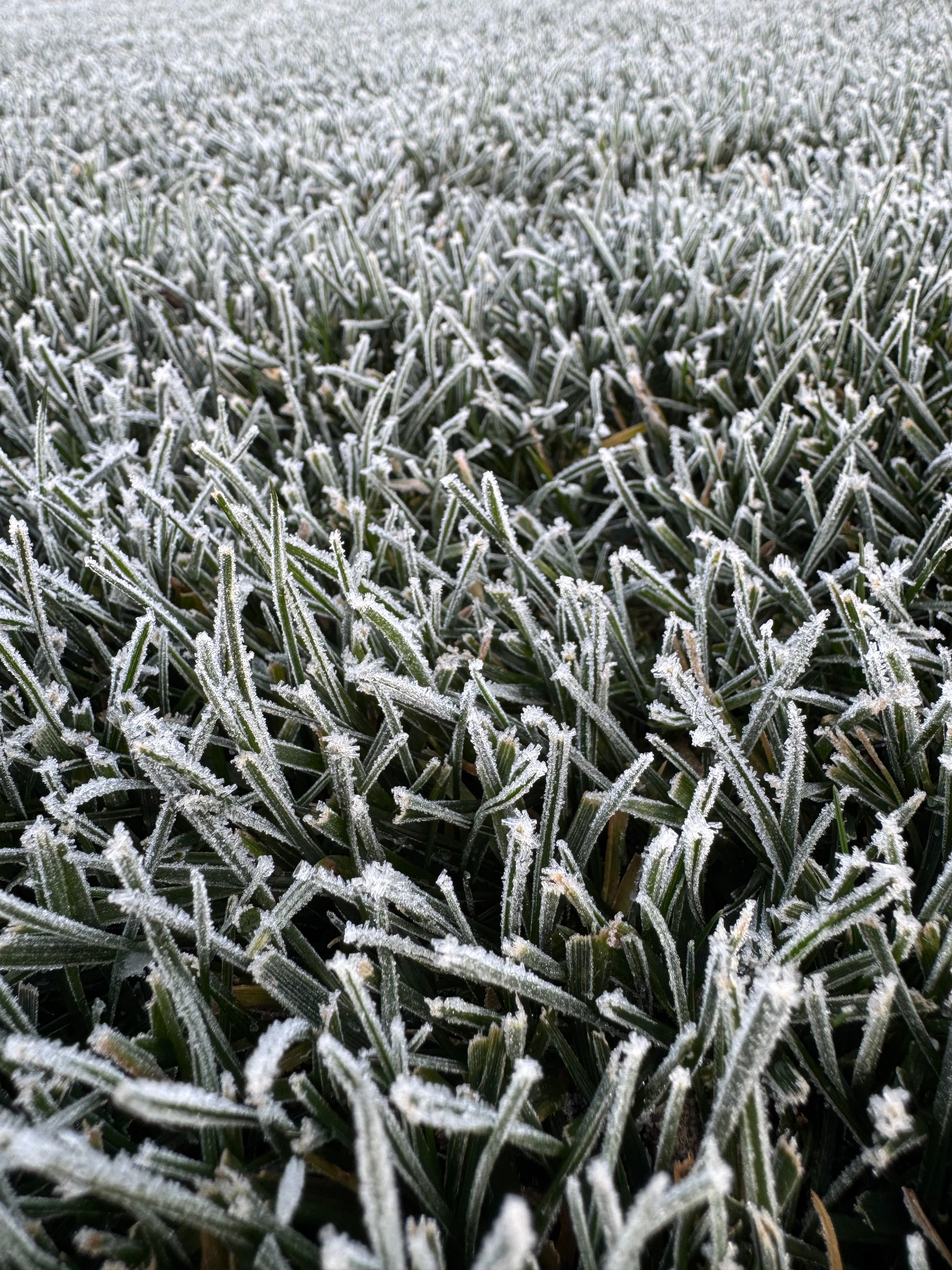
Cool, crisp mornings can make your lawn sparkle like glass, but that glittering frost comes with real risk to your grass and garden beds. Those frozen blades and crystal-coated leaves may look serene, yet under that sparkle lies fragile plant tissue that can easily crack under pressure. Understanding why walking on frosty turf harms your lawn, and maximizing soil health, ensures your lawn stays healthy until spring and quickly recovers from any frost or winter damage.

Why You Shouldn’t Walk on Frosty Grass
When frost forms, it turns the moisture within each blade of grass into ice crystals. These frozen cells are rigid and brittle, which means every step can crush or puncture living tissue. After thaw, damaged areas often appear as brown or straw-colored footprints that linger well into spring.


Frost-damaged turf doesn’t just look rough, it weakens your lawn’s ability to recover from winter stress. Damaged crowns (the growth points of grass plants) are slower to green up and more prone to disease.

Turf Tip:
If your lawn is frosty, stay off! Wait until the blades thaw and become flexible again, typically once sunlight warms the surface by mid-morning. Limit foot and pet traffic until then.

How to Maximize Fall Soil Nutrition for Spring Recovery
Maximizing fall soil nutrition is key for helping your lawn recover quickly and thrive in the spring. Start by using a MySoil test kit to analyze your lawn’s soil for nutrient and pH imbalances before the cold sets in. The test results will guide you in choosing the right fertilizer and amendments, applying nutrients like nitrogen and potassium in the fall helps roots store essential food, enhances winter hardiness, and improves spring green-up.
After receiving your MySoil results, incorporate any recommended amendments such as lime to correct soil pH, or organic matter to boost soil health. Apply a slow-release fertilizer based on your test kit’s recommendations and aerate the lawn if needed so nutrients reach the roots. This tailored, data-driven approach ensures your lawn is well-nourished through winter and prepared for vigorous growth when spring arrives.
Share:
When Should I Stop Mowing My Lawn For The Year?
When and Why Should I Apply Pre-Emergent to My Lawn This Spring?