
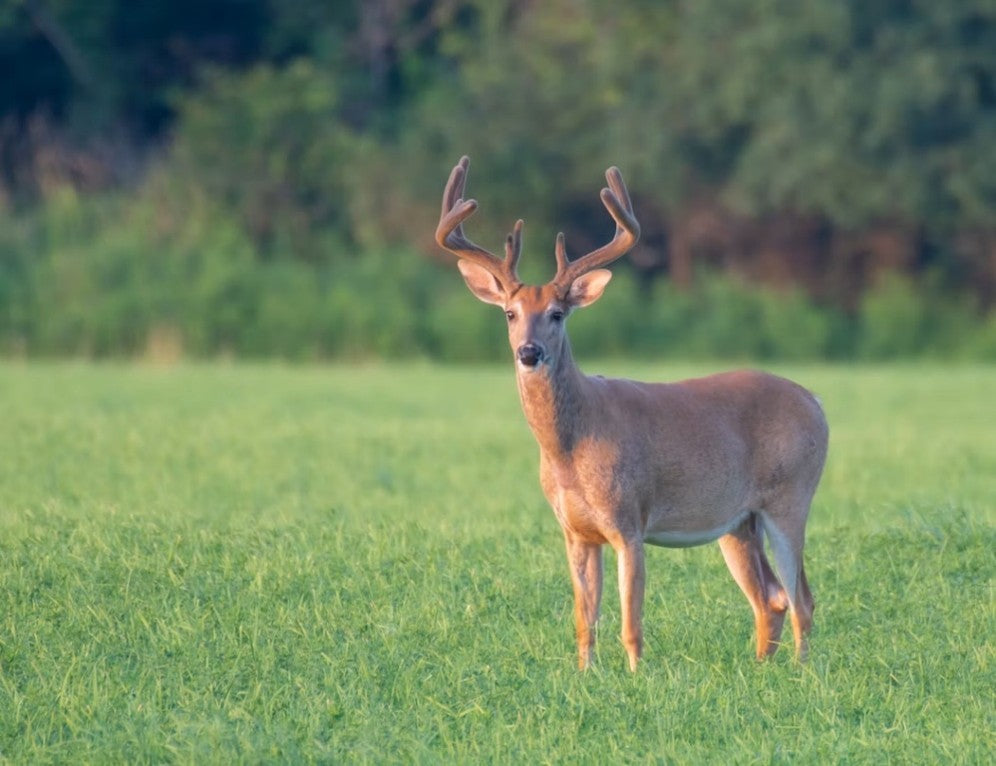
For deer, turkeys, and upland game birds
When you plant fall food plots, you're not just "putting in groceries"—you're building a long-term nutrition program for deer, turkeys, and upland game birds like pheasants and quail. The soil under those plots determines how much food you grow and how nutritious that food really is. MySoil food plot testing is built to turn that soil data into a precision nutrition plan that feeds the soil, so the soil can reliably feed your wildlife.
Across a property, different plots often serve different roles: a brassica mix for late-season energy, a clover stand for protein, cereal grains for fall and winter forage, and diverse blends that layer habitat and nutrition. MySoil lets you tailor fertility and pH for each of those plot types so you're not treating a brassica strip the same as a clover field or a grain mix intended to hold birds and deer into winter.
Start With Soil Testing: The Foundation For Every Species
Whether you're managing whitetails in timber country, turkeys across mixed cover, or pheasants and quail in upland habitat, everything starts with the soil. Testing each unique plot:
- Shows pH, so you know whether amendments such as lime or sulfur are needed to adjust pH to be optimal for your brassicas, clover, grains, or diverse blends.
- Reveals nutrient levels (like phosphorus, potassium, and micronutrients) so you can apply what each plot needs instead of guessing.
- Highlights differences between plots—important when comparing different land use intentions and crop or plant species rotations.
With MySoil, you collect a sample from each plot, send it in, and get clear, plot-specific recommendations that match your food plot species and goals. That transforms "generic fertilizer per acre" into precision nutrition: the right nutrients, at the right rate, in the right place.
Fall Is Prime Time: Fix pH, Then Tune Fertility
Fall is the ideal moment to test and adjust, because you can line up soil conditions with what you're planting and what wildlife will be eating over the next several months.
Step 1: Correct pH for all crop types
Most common food plot crops—brassicas, clover, cereal grains, and mixed blends—perform best in a slightly acidic to neutral range. If pH is too low, deer brassicas don't reach their potential, clover struggles, and your grains can't fully use the fertilizer you apply. MySoil results will show if you need lime so that:
- Brassica plots can fully access the nutrients they need to build big, energy-dense bulbs and leafy tops for deer.
- Clover stands have the environment they need to fix nitrogen and maintain high protein for deer and turkeys.
- Cereal grain plots grow thicker, more resilient stands that feed deer, turkeys, pheasants, and quail deeper into the season.
- Mixed blends have a balanced soil environment where multiple species can thrive together instead of fighting poor chemistry.
Step 2: Build a fertility plan by crop and species
Once pH is set, you can fine-tune fertility for each plot type:
-
Brassicas (deer energy plots)
Fall fertility focused on adequate nitrogen, phosphorus, and potassium supports lush leaf growth and strong root development in crops like turnips, radishes, and rape. This provides high-energy forage for deer as they build fat reserves heading into winter. -
Clover (protein and consistent forage)
Clover plots benefit from balanced phosphorus and potassium and proper pH to support nitrogen fixation. These stands can offer high-protein forage for deer and turkeys well beyond fall, becoming a backbone of long-term nutrition. -
Cereal grains (multi-species attraction)
Oats, wheat, rye and similar grains respond well to tailored nitrogen and potassium. They produce tender green growth in fall for deer and turkeys and then seed heads that provide valuable feed for pheasants and quail later on. -
Mixed blends (stacking benefits)
Diverse blends that combine brassicas, grains, and legumes require balanced fertility and appropriate pH to let each component perform. With MySoil, you can tune inputs so brassicas have enough nutrients to bulk up, grains have what they need to tiller and head out, and legumes can contribute protein and nitrogen to the system.
How Fall Fertility Changes Forage Quality For Deer, Turkeys, and Upland Birds
Proper fall fertility guided by MySoil testing doesn't just change the look of your plots, it changes the quality and timing of nutrition for multiple species.
For deer:
Well-fertilized brassica and grain plots provide higher-quality forage, more energy and better overall nutrition, helping bucks recover from the rut and does maintain body condition entering winter. Clover adds steady protein through fall and into spring, improving long-term herd health.

For turkeys:
Balanced fertility in clover and grain plots drives denser, more vigorous stands, giving turkeys reliable green forage and insect-rich feeding areas. As grains mature, they create bugging and feeding zones that support turkeys beyond the early season.

For pheasants and quail:
Properly fertilized cereal grains and mixed blends produce stronger plant structure, more cover, and better seed production. These plots offer both protection and feed (seeds and insects) for upland game birds through fall and into winter, making them key pieces of a broader habitat plan.

The result is more than just attraction during hunting season; you're building a nutritional pipeline that benefits wildlife year-round.
Precision Nutrition In Practice: A MySoil-Driven Workflow
Here's a simple way to put MySoil to work on a multi-species, multi-crop property:
-
Sample each plot based on its role
Take samples from brassica plots, clover fields, grain strips, and mixed blends separately. Treat each as its own nutritional zone for deer, turkeys, and upland birds. -
Use MySoil results to build plot-specific plans
For each plot, review pH and nutrient levels and follow the recommendations. Adjust lime and fertilizer rates based on whether that plot is primarily a deer energy plot, a long-term clover stand, a grain strip for birds, or a mixed habitat/forage blend. -
Apply inputs with intention, not guesswork
Spread amendments and fertilizer according to the MySoil guidance, focusing on the crop and wildlife objectives of each plot. This keeps costs under control while improving forage quality and consistency. -
Monitor wildlife use and plot performance over time
Note how deer, turkeys, pheasants, and quail use each plot through fall and winter, and how the crops hold up. Over seasons, you'll see that plots managed with precision soil data outperform those managed by "whatever was on sale" fertilizer.
MySoil: Feeding the Soil to Feed the Whole System
At the end of the day, managing land for deer, turkeys, and upland game birds is about more than just planting seed, it's about building a resilient, nutritious habitat system. MySoil food plot testing is your precision tool for turning soil information into wildlife nutrition, helping you create fall plots that do more than draw animals for a photo, they support them for the long haul. Build your soil now for the future of your wildlife.

Share:
Establishing Wildlife Food Plots: A Step-by-Step Guide for Homeowners and Landowners