
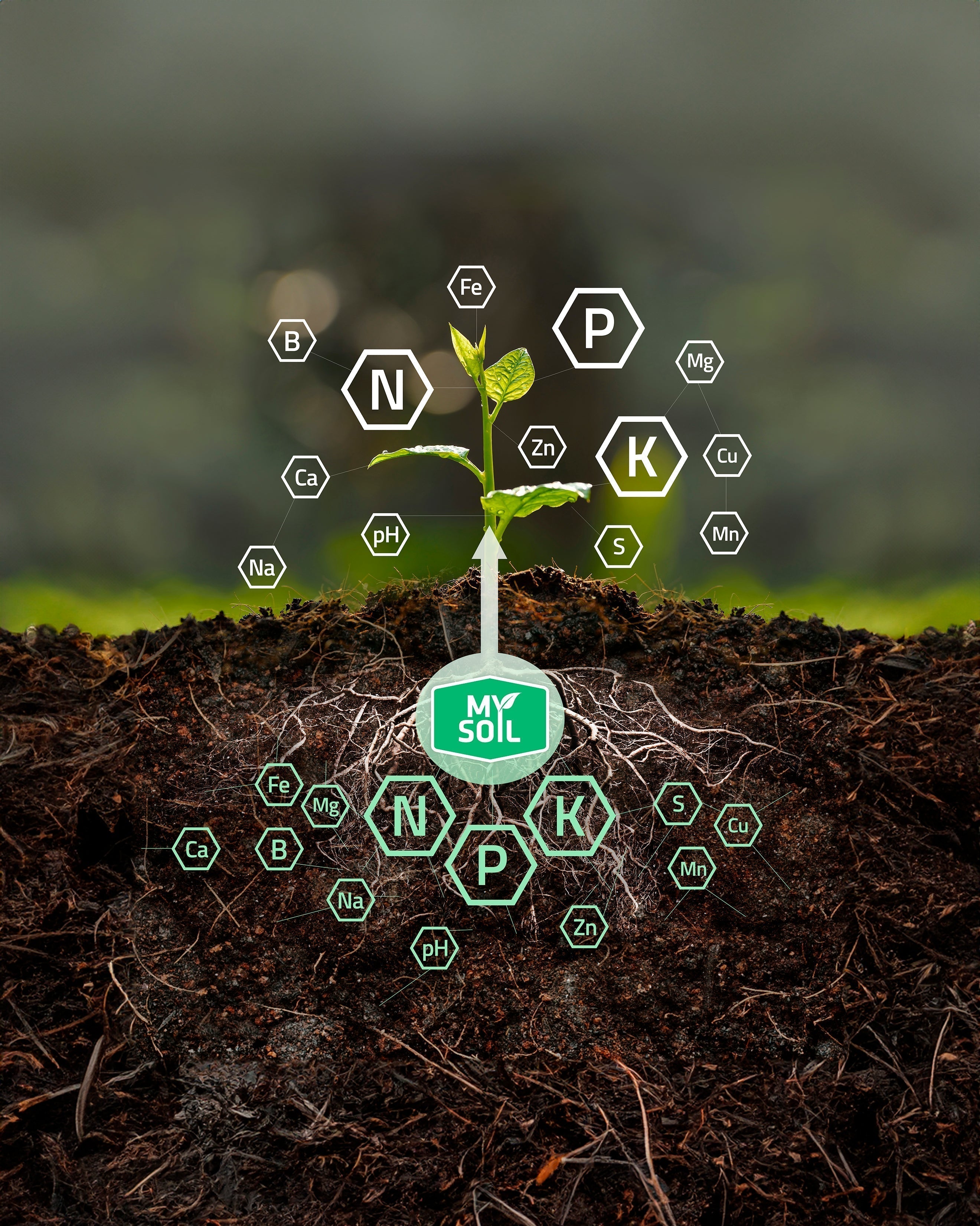
What Do All the Required Plant Nutrients Do?
Jump to a Nutrient:
Nitrogen
Phosphorus
Potassium
Calcium
Magnesium
Sulfur
Boron
Chloride
Cobalt
Copper
Iron
Manganese
Molybdenum
Nickel
Zinc
Primary Macronutrients: Nitrogen, Phosphorus, & Potassium
Nitrogen (NO3- & NH4+)
Nitrogen is a primary macronutrient needed by plants in higher amounts than any other nutrient (except potassium in some crops). In plants, nitrogen plays a part in the following:
- Protein synthesis
- Component of chlorophyll
- Important in cell elongation
- Part of nucleic acids (DNA and RNA)
- Activates enzymes to assist in water and nutrient uptake
Soil mobility: Nitrate (NO3-) is highly mobile and susceptible to leaching out of the rootzone, while ammonium (NH4+) is less mobile.
Reserve form: Primarily organic. Nitrogen is mineralized (released) from organic matter.
Deficiency symptoms: Deficiency symptoms will first appear in older tissue as nitrogen will move from older tissue to younger tissue where it is needed. The symptoms will appear as a general chlorosis in old leaves, along with stunted plants, and less tillering and overall vegetative growth.
Common sources to correct a deficiency: Urea, ammonium sulfate, blood meal, feather meal, calcium nitrate, many different commercially available blends.
Notable:
- Nitrate contributes to eutrophication of surface waters so should be applied responsibly.
- Nitrogen is highly transformative and has a complex cycle in the soil that is driven by soil microorganisms.
- Approximately 78% of the air we breathe is nitrogen gas (N2), but plants can't directly use it in this form.
- Lightning can fix atmospheric nitrogen and deposit it on the earth's surface. This is cool, but contributes little nitrogen to our soils globally.
Phosphorus (HPO4-2, H2PO4-)
Phosphorus is a primary macronutrient that is found in every living cell, plant and animal. Let's take a quick look at the roles it play in plants:
- Plays a key role in photosynthesis
- Aids in metabolism of sugars
- Important in energy storage and transfer (ADP and ATP or Adenosine diphosphate and Adenosine triphosphate)
- Essential for cell division and cell enlargement
- Aids in transfer of genetic information, is in DNA and RNA
- Promotes healthy root growth and early shoot growth
Environmental Concern: Phosphate moving into surface waters contributes to algal blooms which deplete oxygen and can cause 'dead zones'. This is known as eutrophication. Only apply if a soil test shows a deficiency or you are establishing new plants. Don't apply if it is likely that the fertilizer will move off site due to runoff.
Soil mobility: Relatively immobile, but can move in coarse, sandy, low organic matter soils. May get 'fixed' by Calcium (high pH soils), iron, or aluminum (low pH soils)
Reserve form: Mineral and organic. Phosphate rock is mined for fertilizers.
Deficiency symptoms: Stunted plant growth, leaf shape changes, purpling or reddening of tissue. Older tissue affected first.
Common sources to correct a deficiency: Diammonium phosphate (DAP), monoammonium phosphate (MAP), triple superphosphate (TSP), rock phosphate, bone meal, fish bone meal, manure.
Notable: Apply near seed when establishing new plants; mycorrhizal fungi relationships with plants enhance uptake of phosphorus; some state have lawn fertilizer phosphorus laws
Potassium (K+)
Potassium is a primary macronutrient that never becomes incorporated into organic compounds in the plant, but moves freely in its ionic form and is involved in many functions such as:
- Helping regulate turgor pressure in guard cells and other cells, therefore aiding in transpiration and movement of leaves in response to light
- Protein synthesis
- Intracellular pH adjustment
- Enhance CO2 fixation during photosynthesis
- Transport of various compounds
- Balance of electric charges in cells
- May enhance winter hardiness of some species
- May enhance stress resistance in some species (insect, diseases, drought)
Soil mobility: Moderately mobile especially in coarse, sandy, low organic matter soils. Relatively immobile in medium and fine textured soils high in silt and clay.
Reserve form: Mineral. Examples include micas and feldspars.
Deficiency symptoms: Delayed pollination and maturity, stunted or slowed growth, leaf margin chlorosis followed by necrosis (yellowing then death), weakened stems, higher susceptibility to stresses such as disease and drought.
Common sources to correct a deficiency: Potassium chloride, sulfate of potash, potassium nitrate, langbeinite, sul-po-mag.
Notable: Potassium will physically leach from leaf tissue following rainfall and it will become deposited at the soil surface. This is a means of nutrient transport that is somewhat unique to potassium and you may hear it termed 'nutrient uplift' by some.
Secondary Macronutrients: Calcium, Magnesium, & Sulfur
Calcium (Ca++)
Calcium is a secondary macronutrient and is also commonly used as a soil amendment. In plants, calcium has the following roles:
- Cell wall and membrane structure and stability
- Aids in resisting bacterial and fungal infection
- Promotes cell elongation
- Plays a role in uptake of other nutrients
- Plays a role in hormonal processes
Soil mobility: Relatively immobile. Calcium has a strong affinity for cation exchange sites so is readily adsorbed on soil and organic particles.
Reserve form: Primarily mineral. Total calcium in soil minerals may range from a low of around 0.1% in highly weather soils to a high of nearly 25% in calcareous soils. Normal calcium levels are approximately 1% give or take 0.5%.
Deficiency symptoms: Not common, but may be found in acidic soils. Symptoms would first appear in young tissue, as calcium is not mobile in the plant. Symptoms include 'tip burn' in young leaves, blossom end rot in tomatoes, abnormal bud development, exceptionally dark green foliage, early shedding of blossoms, and weak stems.

Common sources to correct a deficiency: Lime, dolomitic lime, gypsum, calcium chloride, calcium nitrate.
Notable:
- Lime (CaCO3) is used to increase soil pH
- Gypsum (CaSO4) is used to displace sodium in sodic soils as part of the reclamation process
- Calcium chloride is often sprayed on apples to deliver foliar calcium for uptake of the fruit.
- Calcium helps flocculate the soil, creating structural units that aid in water infiltration and gaseous exchange in the soil.
Magnesium (Mg++)
Magnesium is a secondary macronutrient that plays many important roles in the plant, let's take a quick look at some:
- It serves as the central atom in the chlorophyll molecule.
- It serves a foundational role in ribosomes, which synthesize proteins in cells.
- Magnesium is also essential in the creation of adenosine triphosphate (ATP) for energy storage in the plant.
- It is also notable that magnesium aids in exporting carbohydrates from the leaves to other growing plant parts in need.
Soil mobility: Relatively immobile, but can move in coarse, sandy, low organic matter soils
Reserve form: Mineral. What minerals? Dolomite, talc, biotite, and magnesite are some examples.
Deficiency symptoms: Interveinal chlorosis on older leaf margins which then migrates to the center of the leaf as the deficiency worsens.

Common sources to correct a deficiency: Dolomitic lime (if pH adjustment is also needed), langbeinite, sul-po-mag, and magnesium sulfate.
Sulfur (SO4-2)
Sulfur is a secondary macronutrient needed by plants in amounts only surpassed by the primary macronutrients nitrogen, phosphorus, and potassium. In plants, sulfur plays a part in the following:
- Protein synthesis
- Assists in seed production
- Has a role in chlorophyll production
- Is a necessary component of the amino acids cysteine, methionine, and cystine.
- Is required for successful Rhizobia colonization and nodulation on legumes
Soil mobility: Highly mobile and susceptible to leaching out of the rootzone.
Reserve form: Primarily organic. There is sulfur in soil minerals, especially near volcanoes.
Deficiency symptoms: Deficiency symptoms will first appear in younger tissue as sulfur is not plant mobile. The symptoms will appear as a general chlorosis in young leaves, stems, or flowering buds.
Common sources to correct a deficiency: Ammonium sulfate, sulfate of potash, langbeinite, sul-po-mag, elemental sulfur
Notable:
- Elemental sulfur is commonly used to decrease pH (acidify) in basic, alkaline soils.
- The need for sulfur fertilization has increased following clean air legislation over the past several decades. There is now less atmospheric sulfur deposition as emissions from transportation and industrial sources has been significantly reduced.
- There is evidence of a nitrogen – sulfur synergy in which uptake of both nutrients is increased when both are present in adequate quantities.
- Sulfur is a component of the volatile plant compounds that give the distinct smell and flavor to garlic and onions.
Micronutrients: Boron, Chloride, Cobalt, Copper, Iron, Manganese, Molybdenum, Nickel, & Zinc
Boron (H3BO3 & H4BO4-)
Boron is a micronutrient that has the following roles:
- Cell wall structure
- Formation of proteins
- Nodule formation
- Aids in flowering
- Flower initiation and pollen development
- Fruit and seed development
Soil mobility: Relatively mobile as boric acid (H3BO3) is the primary form and is uncharged, so readily moves in soil water.
Reserve form: Primarily organic. Boron is mineralized from OM by soil microorganisms.
Deficiency symptoms: These vary by species to some extent, however, symptoms are typically found on youngest leaves or growing points first. Symptoms may include shortened internode length, lack of development of new shoots, shriveled anthers without pollen, and mis-developed fruit that may have interior rot.
Common sources to correct a deficiency: Boric acid, borax, sodium pentaborate, Solubor®
Notable:
- There is a fine line between boron sufficiency and toxicity. Do not over apply. Toxicity symptoms include yellowing of leaves and scorching on the leaf margins.
Chloride (Cl-)
Chloride is a micronutrient that has the following roles:
- Activates enzymes involved in starch use, which affects germination
- Aids in the transport of potassium, calcium, and magnesium in plants
- Influences cellular hydration and stomatal activity (allowing plants to better respond to drought stress).
- Strengthens stems
- Hastens plant development
- Reduces incidence of plant diseases
Soil mobility: Highly mobile, moves with soil water. Chloride will readily leach from the rootzone.
Reserve form: Chloride is abundant in the world around us. It can be found in rainfall, volcanic emissions, sea spray, irrigation water, soil minerals, and organic matter. Atmospheric deposits are relatively high in coastal regions.
Deficiency symptoms: Symptoms vary by crop species, but it is typical to see wilting and chlorotic younger leaves in chloride deficient plants. Necrosis, browning of leaves, reduced leaf growth, reduced root growth, and an increase in disease susceptibility have also been reported.
Common sources to correct a deficiency: Potassium chloride, magnesium chloride, ammonium chloride, calcium chloride
Notable:
- There are many species of chloride sensitive plants. Examples include grapes, almonds, walnut, strawberries, lettuce, pepper, and potato.
- Toxicity symptoms include chlorosis, low sugar content in fruit, necrosis of leaf edges, leaf burn, drought-like symptoms, and nitrogen deficiency symptoms.
Cobalt (Co+2)
Cobalt is not necessarily essential, but is classified as potentially essential due to the following role in plants:
- Is necessary for nitrogen fixation within the nodules of legumes
Soil mobility: Relatively immobile, but can move in coarse sandy soils with low organic matter.
Reserve form: Cobalt is primarily in reserve form in the mineral fraction of the soil.
Deficiency symptoms: Legumes will develop nitrogen deficiency symptoms due to low nitrogen fixation by the nodules. There are no identified deficiency symptoms for non-legumes.
Common sources to correct a deficiency: Seed treatments of cobalt nitrate or cobalt sulfate
Notable:
- Cobalt is taken up in greater amounts by broadleaf plants than by grasses.
- Most research has focused on cobalt plant tissue concentrations as related to forage quality for feeding livestock.
Copper (Cu+2)
Copper is a micronutrient that has the following roles:
- Aids in photosynthesis and respiration
- Synthesis of lignin (adds rigidity to stems)
- Plays a key role in the formation of viable pollen
- Essential in seed set
- Aids in stress resistance
Soil mobility: Relatively immobile as copper is a divalent cation and has an especially high affinity for organic matter. It readily adsorbs to organic matter; in organic soils this may induce a deficiency.
Reserve form: Primarily mineral, but organic reserves as well. Parent material minerology and level of weathering can affect the levels of copper in the soil. To a lesser extent, copper can also be mineralized from organic material.
Deficiency symptoms: Symptoms vary by crop species. Mild symptoms may appear as a non-descript reduction in vigor or yield. More severe cases will be most pronounced in younger plant tissue and will express as chlorotic and stunted, they may appear similar to frost damage, and advanced symptoms may appear as leaf margin browning. Vegetable crops may see a lack of, or reduction in, flowers. Plants deficient in copper may also be more susceptible to diseases.
Common sources to correct a deficiency: Copper sulfate, copper oxide, chelated copper, and organic forms such as animal manures.
Notable:
- If applying copper, be sure to not over apply or toxicity symptoms may occur. Toxicity would appear as decreased seed germination, reduced root growth, stunted growth, and leaf discoloration.
- Copper based pesticides are often used to control bacteria, fungi, algae, and other potential pests.
Iron (Fe+2 & Fe+3)
Iron is a micronutrient that is often applied and has the following roles:
- Is a component of chlorophyll, so aids in photosynthesis
- Aids in oxidation-reduction reactions
- Aids in respiration
- Essential in enzymatic reactions such as those needed for nitrogen-fixing bacteria to function.
Soil mobility: Relatively immobile in the soil. May be made unavailable as it gets oxidized or forms other insoluble compounds, especially in high pH soils.
Reserve form: Primarily in mineral reserve. Iron is often abundant in the soil, but not in forms that are plant available.
Deficiency symptoms: General chlorosis on younger leaves first coupled with a reduction in overall plant growth. The chlorosis is generally interveinal.
Common sources to correct a deficiency: Ferrous sulfate, Iron oxide, chelated iron sources.
Notable:
- Ferrous sulfate may stain concrete and other hardscapes
- Foliar iron applied to turfgrass often results in an immediate and lasting deeper green color; this is a popular application to enhance color without increasing the mowing frequency as one would find with a nitrogen application.
Manganese (Mn+2)
Manganese is a micronutrient that has the following roles:
- Activates enzymes
- Constituent of certain enzymes
- Essential in photosynthesis
- Synthesis of lignin (adds rigidity to stems)
- Essential for root growth
- Plays a role in nitrogen assimilation and metabolism
Soil mobility: Relatively immobile as zinc is a divalent cation and reacts with oxides, phosphates, and carbonates to form insoluble compounds. Fertilizing with phosphate will not induce a zinc deficiency if zinc is in sufficient supply in the soil.
Reserve form: Primarily mineral, but organic reserves as well. Parent material minerology and level of weathering can affect the levels of manganese in the soil. To a lesser extent, manganese can also be mineralized from organic material.
Deficiency symptoms: Symptoms typically appear in youngest tissue first, as manganese is relatively immobile within the plant. Symptoms may include chlorotic and mottled new leaves, interveinal chlorosis, and the development of brownish spots.
Common sources to correct a deficiency: Manganese sulfate, manganese oxide, chelated manganese, and organic forms such as soy protein hydrolysate.
Notable:
- Manganese is most commonly found as Mn+2 in the soil, but is often complexed with organic compounds such as those organic acids exuded from plant roots.
- Deficiencies most likely to occur on high pH (basic or alkaline) soils.
Molybdenum (MoO4-2)
Molybdenum is a micronutrient that has the primary following roles:
- Production of 'molybdoenzymes' that aid in regulating nitrogen nutrition. In legumes, these enzymes aid in nitrogen fixation while in non-legumes these enzymes help control the conversion of nitrate into protein.
Soil mobility: Moderately mobile, moves with soil water. Mobility may be impacted by soil pH, percent organic matter, and soil moisture levels.
Reserve form: Molybdenum is primarily in reserve form in the mineral fraction of the soil.
Deficiency symptoms: Symptoms may appear on entire plant, as molybdenum is plant mobile. Symptoms include stunted plant growth and a general chlorosis or yellowing. Interveinal chlorosis may also occur. Leaf edges may also become brown and necrotic.
Common sources to correct a deficiency: Molybdenum trioxide, seed treatment applications on legume seeds, ammonium molybdate, and sodium molybdate.
Notable:
- The micronutrients molybdenum and nickel are required in the lowest concentrations of all essential plant nutrients.
- Molybdenum requirement is higher for legumes than non-legumes.
- Unlike most micronutrients, molybdenum availability is increased by increasing soil pH.
Nickel (Ni+2)
Nickel is a micronutrient that is the most recent (1987) nutrient categorized as essential due to its role as:
- A central part of the framework of the urease enzyme which is essential for the conversion of urea to ammonium.
- May aid in protection against plant diseases
Soil mobility: Relatively mobile in the soil.
Reserve form: Nickel is primarily in reserve form in the mineral fraction of the soil.
Deficiency symptoms: Necrosis of leaf tips of older leaves from urea accumulation and toxicity. Diminished lignin production has also been observed and reported.
Common sources to correct a deficiency: Rarely needed, but nickel sulfate, nickel nitrate, and nickel lignosulfonates may be applied as a foliar spray. Nickel lignosulfonates are the preference due to fewer safety concerns for applicators.
Notable:
- As much as 70% of plant nickel may be translocated to the seeds during the reproductive stage.
Zinc (Zn+2)
Zinc is a micronutrient that has the following roles:
- Structural component of proteins
- Enzyme cofactor
- Aids in hormone regulation
- Promotes seed maturation and development
Soil mobility: Relatively immobile as zinc is a divalent cation and reacts with oxides, phosphates, and carbonates to form insoluble compounds. Fertilizing with phosphate will not induce a zinc deficiency if zinc is in sufficient supply in the soil.
Reserve form: Mineral and organic reserves. Parent material minerology and level of weathering can affect the levels of zinc in the soil. Zinc can also be mineralized from organic material.
Deficiency symptoms: Symptoms typically appear in youngest tissue first, as zinc is largely immobile within the plant. Symptoms may include stunting, slight interveinal chlorosis, reduced leaf size, and short internodes. Symptoms are similar to those of other micronutrients such as iron and manganese.
Common sources to correct a deficiency: Zinc sulfate, zinc oxide, chelated zinc, and organic forms of zinc such as manures, especially poultry manure.
Notable:
- Zinc deficiency in food crops contributes to zinc deficiency in about 30% of human diets globally.
Share:
Get Ahead for Spring: The Benefits of Fall Soil pH Amendments
Fate of Soil Nutrients: Why Some Build Up and Others Don’t