
Even the best-tended flower garden will eventually meet a pest or two. The good news is that most common problems can be managed with a few simple strategies. In this article:
- Common pests
- General control options
This article is part of our Beginners Flower Garden Guide
The Best Defense: Healthy Plants
Our first order of business should always be growing the healthiest plants we can. Healthy plants better resist, and recover from, pests and pest damage. That's where good site selection, proper spacing, smart watering, and a soil test pay off.
Even if we're successful at this, it's likely we'll still encounter some pests.
Common Flower Garden Pests
Common pests include:
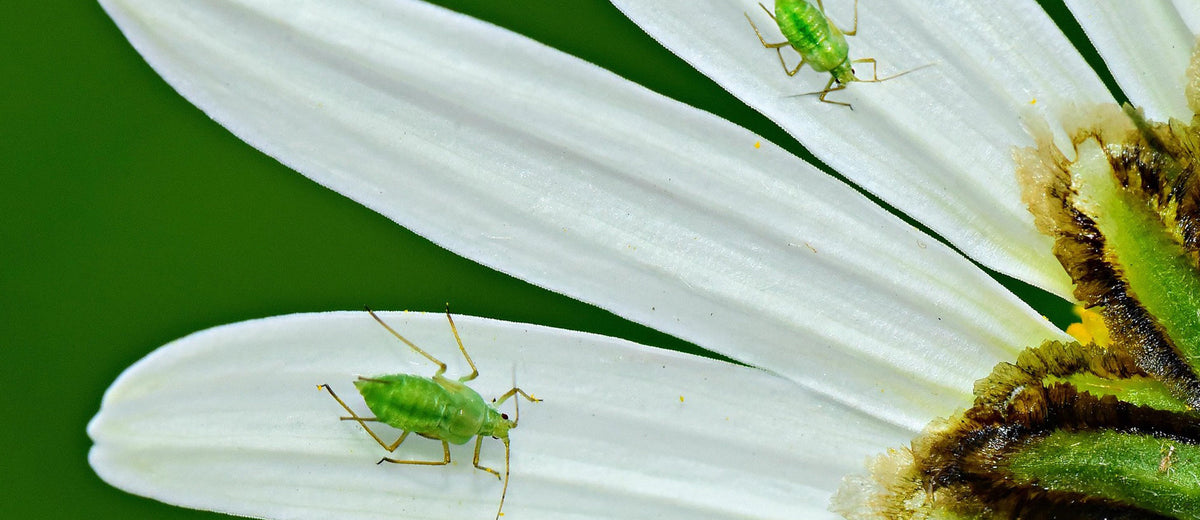
- Aphids
- Spider mites
- Slugs and snails
- Deer
- Rabbits
- Fungal diseases, such as powdery mildew
This is a short list. Expect a myriad of other pests that are more relevant to your region or to certain microclimates. What follows is a brief overview of considerations for control.
Aphids and Other Insects
- Use diatomaceous earth to discourage insects.
- Introduce beneficial insects that prey on pests, such as ladybugs and praying mantis.
- Spray plants with a dish soap and water mixture.
- Use a hose to knock insects off the plant.
- Use an insecticide such as Sevin. Always follow the label directions.
Slugs and Snails
- Manage moisture. Make the overall garden less damp; drip irrigation helps.
- Improve air movement with strategic pruning or by dividing crowded plants.
- Use traps, such as beer traps or trap boards.
- Apply crushed eggshells around plants.
- Hand pick them.
- Use a pesticide such as Sluggo. Always follow label directions.
Deer and Rabbits
- Fence your garden. For deer, it needs to be 8 feet high.
- Plant deer-resistant plants.
- Use motion-activated sprinklers to scare them off.
- Apply deer and rabbit repellent sprays.
Fungal Diseases (Like Powdery Mildew)
- Plant resistant varieties.
- Increase air circulation by pruning adjacent trees and shrubs.
- Mulch around plants to retain soil moisture.
- Avoid over-fertilization.
- Use sulfur-containing organic fungicides.
- Use fungicides that contain potassium bicarbonate.
- Use neem oil.
- Accept or tolerate small infections.
That last point is worth repeating: a perfect, pest-free garden isn't realistic. A little damage here and there is normal, and often the plant will outgrow it.
Scout Early, Act Early
Most pest problems are easier to solve when caught early. Regular walk-throughs help you spot trouble before it spreads, and they let you see the beneficial insects already working for you.
Read the full guide: Beginners Flower Garden Guide
Share:
Deadheading Flowers: Why It Matters and How to Do It