
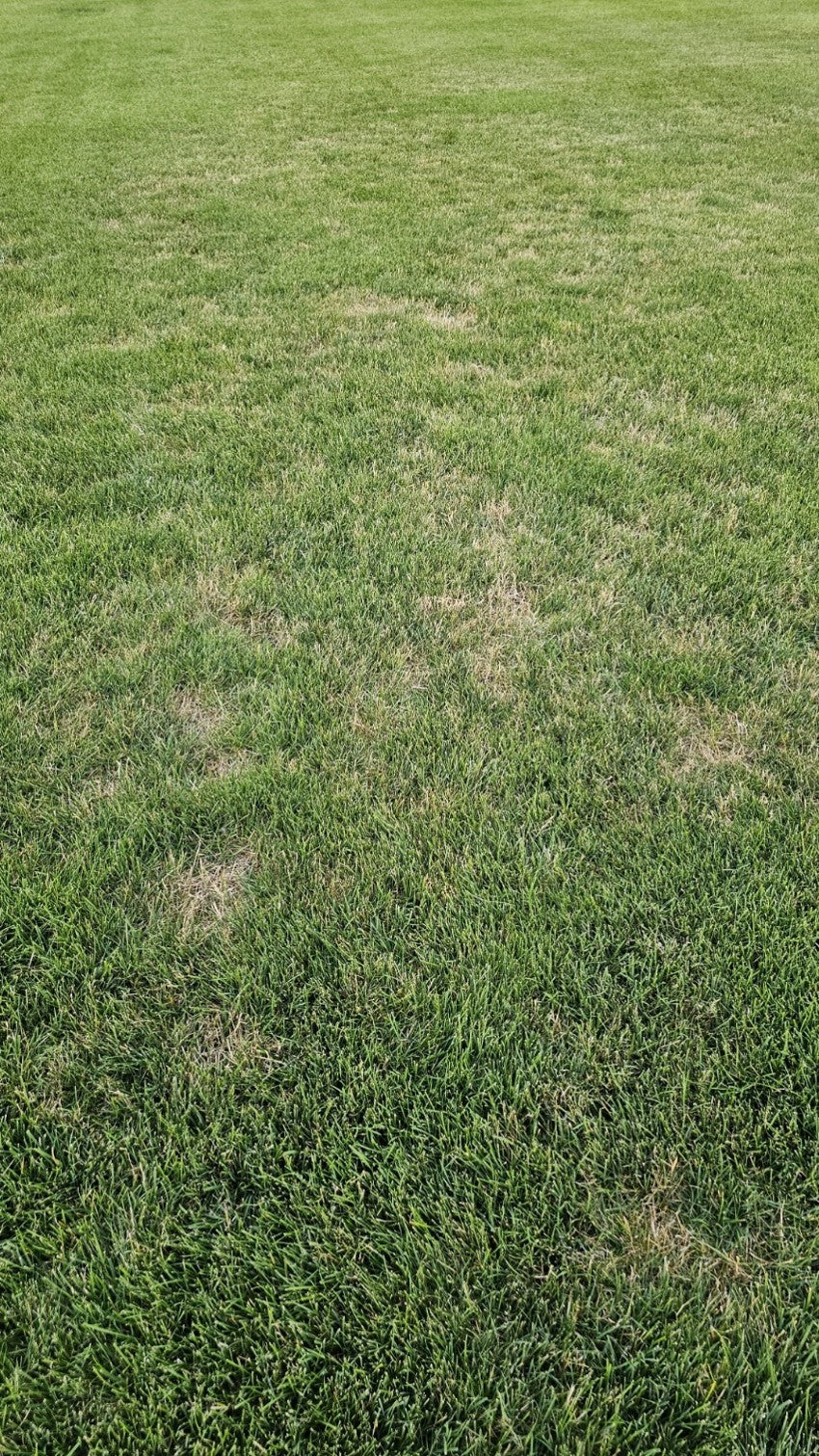
Summer patchiness can look like drought at first glance, but irrigation won't solve every brown spot. Billbugs, chinch bugs, grubs, sod webworms, and armyworms can all create damage that looks like heat stress until you inspect the turf closely. July and August are peak season for a handful of turf-eating insects, and they're all experts at disguising themselves as heat damage. Catching the right pest early, and understanding why some lawns get hit harder than others, is the difference between a targeted response and a long recovery period later in the season.
Why Summer Damage Gets Misdiagnosed So Often
In mid- and late summer, several turf pests create nearly the same visual symptoms: fading color, thinning turf, and irregular patches that expand in hot weather. That overlap is why diagnosis has to start below the canopy, not just from the color of the lawn.
There's also a soil-health pattern behind all of this: thin, compacted, or nutrient-stressed turf shows insect damage faster and recovers more slowly, while dense, well-fed turf can tolerate a surprising number of pests before symptoms appear. Healthy lawns mowed at 2 inches or higher are tolerant of a lot of insect feeding without showing damage or symptoms; this is why most lawns don't need to be treated every year unless damage is actually visible. If you're not certain about the health and nutrient levels in your soil, perform a MySoil test and follow the guidance for a resilient lawn. That's why diagnosing the issue always has to come before treatment, and why promoting lawn health is half the solution.
Billbugs: The Drought Look-Alike
Billbugs are snout beetles whose larvae feed first inside stems and crowns, then move deeper into the root zone as they mature in July and August. The result is a lawn that can look drought-stressed on the surface even when the real problem is feeding injury in the plant tissue.


How to confirm it's billbugs: Pull a handful of suspect turf and look for stems that break cleanly at the crown, along with fine, powdery frass in the hollowed tissue. Grub damage, by contrast, lets you peel back a whole mat of turf like carpet or thin sod.
Timing matters: Because larvae are protected inside stems early on and move into the soil later, most specialists recommend targeting adults in spring before egg-laying, or catching young larvae early in their feeding window; treatments applied once larvae are mature and deep in the crown are far less effective.

Chinch Bugs: Thrive Where It's Hot, Dry, and Thatchy
Chinch bugs are surface-feeding insects that puncture grass blades and inject compounds that disrupt the plant, which is why the turf may stay yellow or brown even after watering. They prefer sunny areas with open exposure and thatch-heavy turf, especially during the hottest part of summer.
How to check for chinch bugs: Cut both ends off a coffee or juice can, push it 2–3 inches into the turf at the edge of a damaged patch, and fill it with soapy water. Chinch bugs will float to the surface within five to ten minutes. Seeing several chinch bugs in a can sample suggests the population may be high enough to cause meaningful damage.
White Grubs: The Ones That Attract Skunks and Crows
White grubs are the immature stage of scarab beetles, and they feed on roots rather than blades. When populations build, the turf may loosen at the soil surface, and digging by birds or mammals often provides the first clue that something is happening belowground.

The treatment threshold varies based on inherent lawn health, with 8–10 grubs per square foot for lower-maintenance lawns indicating a need for treatment and well-irrigated, higher-maintenance turf tolerating more before damage is apparent. To check, cut a 12-inch flap of turf at the edge of a suspect patch, fold it back, and count grubs in the top few inches of root zone and soil.
Sod Webworms and Armyworms: Feed at Night
Sod webworms and armyworms feed on leaf tissue near the surface, which leaves grass looking shredded, clipped, or brushed down. Because they feed mostly after sunset, you usually have to catch them in the evening to confirm they're active. Fall armyworm outbreaks can be especially fast-moving, sometimes stripping turf within a few days during heavy pressure.
Quick Comparison: Which Summer Pest Do You Have?
| Pest | Peak damage window | Look for | Diagnostic test |
|---|---|---|---|
| Billbugs | Mid-June–August | Stems snap at soil line, sawdust-like frass inside; legless larvae | Tug test |
| Chinch bugs | July–August (hot, dry spells) | Yellow patches that don't respond to watering; sunny, thatchy areas | Soapy-water can test |
| White grubs | Late July–October | Turf lifts like carpet; C-shaped larvae with visible legs; animal digging | Turf-flap dig test |
| Sod webworms/armyworms | Late spring–August | Ragged, grazed blades; small tan moths at dusk | Nighttime flashlight check |
Cultural Controls: Your First Line of Defense
Regardless of which pest you're dealing with, the same foundational practices for reducing damage and speeding recovery are:
- Mow higher. Turf kept at 2–3 inches tolerates far more insect feeding without visible injury than low cut lawns.
- Manage thatch. Chinch bugs and billbugs both use thick thatch as shelter and overwintering habitat, so dethatching or aerating reduces their habitat.
- Water deliberately. Chinch bugs prefer hot, dry turf, so consistent irrigation during dry spells can suppress populations, while grub-damaged turf recovers better with steady fall and spring watering.
- Feed the soil, not just the leaves. Turf under nutrient or pH stress recovers from insect feeding more slowly, so knowing what your soil actually needs, rather than guessing at a fertilizer bag, keeps grass growing vigorously enough to shrug off moderate pest pressure. A MySoil test kit shows you exactly where your lawn's nutrients and pH stand before you spend money on treatments it may not need.
Organic and Biological Control Options
If you're managing your lawn organically or just want to avoid broad-spectrum pesticides, two biological tools have solid research behind them:
- Beneficial (entomopathogenic) nematodes are microscopic roundworms that seek out soil-dwelling larvae, including billbug and white grub larvae, and introduce bacteria that kill the host within 24–48 hours. They work best applied to moist, recently irrigated soil with temperatures between roughly 55°F and 99°F.
- Milky spore (Paenibacillus popilliae) is a naturally occurring bacterium that specifically targets Japanese beetle grubs. It's slower to establish than a chemical insecticide, often applied over a two-year program, but once established in the soil it can provide control for many years without harming pets, people, or beneficial insects.
Both options work with the soil biology rather than against it, which fits naturally alongside an organic fertility program, but they need accurate timing and moist, well-drained soil to perform, so it's worth confirming those baseline soil conditions first and doing further research to ensure success.
When Chemical Control Makes Sense
For heavy, confirmed infestations, targeted insecticide applications are sometimes the fastest way to stop active damage. It's widely agreed upon that the key is timing relative to the pest's life cycle: billbugs are best hit as overwintered adults before they lay eggs in spring, or as young larvae before they burrow deep into crowns; grubs are most vulnerable right after egg hatch, generally from mid-summer into early fall; and sod webworm or armyworm larvae are easiest to control while small, ideally with a treatment applied in late afternoon or evening when they're actively feeding. Always confirm the pest and its life stage before treating. Don't spray for grubs or billbugs you haven't actually found, since insecticide timed to the wrong life stage is essentially wasted.
The Long-Term Fix Is Healthy Soil
Insecticides and biological controls both buy you time, but they don't address why one lawn shrugs off a moderate pest load while the neighbor's lawn collapses under the same pressure. The consistent theme across billbug, chinch bug, and grub research is that dense, deep-rooted, well-fed turf tolerates far more insect feeding before it shows visible damage and recovers faster after.
That's where a soil test earns its keep. Instead of guessing at fertilizer or dumping on more nitrogen, a MySoil test kit tells you exactly which nutrients and pH corrections your lawn needs to rebuild root depth and density, the same qualities that make turf naturally more resistant to billbugs, chinch bugs, grubs, and webworms in the first place.
FAQ
Is billbug damage the same as grub damage?
No. Both cause brown, thinning patches, but billbug larvae are legless and damage shows up as stems that snap cleanly at the soil line with sawdust-like frass inside. With grub damage, the turf often loosens so much that it can be lifted back in sections.
Will watering more fix chinch bug or billbug damage?
Watering helps distinguish true drought stress (which recovers quickly) from insect damage (which doesn't), but it won't reverse existing feeding damage from chinch bugs or billbugs. It can make turf less attractive to chinch bugs, which prefer hot, dry conditions.
Do I need to treat every year?
Not necessarily. Focus on lawn health; healthy, adequately fed and watered lawns can tolerate a fair amount of insect activity without visible damage, so treatment should be based on confirmed thresholds and visible symptoms rather than a routine spray application.
What's the single best thing I can do to prevent summer insect damage?
Build turf density and root depth through correct fertility, mowing height, and irrigation. Start with a soil test so you know exactly what your lawn is missing — a strong, well-fed lawn is your best long-term defense against every pest on this list.
Share:
Seeding vs Sod: Cost, Pros, Cons, and Why Premium Grass Seed Is Often Better for Your Lawn
How does mowing a lawn also control weeds?