
Garden Watering Guide: Best Irrigation Methods for Healthy Soil and Plants
-
Rule of thumb = at least one inch of water per week
- How many gallons is one inch? Click here to learn more
- Check soil moisture
- Irrigation/watering options
Watering your garden correctly is one of the most important factors in plant health, nutrient availability, and overall yield. But it's not just about how often you water, it's about how efficiently water moves through your soil and reaches plant roots.
For MySoil customers, this becomes even more important. Your soil test results tell you what nutrients are available, but proper watering determines whether your plants can actually access those nutrients.
How Much Water Does Your Garden Need?
A common rule of thumb is to apply about one inch of water per week, including rainfall. However, this varies based on your soil composition and environmental conditions.
For example:
- Sandy soils drain quickly and may require more frequent watering
- Clay soils hold water longer but are prone to overwatering
- Loamy soils provide the best balance of drainage and retention
The key is not just how much you water, but how well your soil holds and delivers that water to plant roots.
Check Soil Moisture, Not Just the Calendar
Rather than sticking to a rigid schedule, it's better to monitor soil moisture directly.
You can:
- Use a soil probe or moisture meter
- Dig down 3–6 inches to check moisture by hand
- Observe plant signals like wilting or slowed growth
Healthy soil should feel moist but not saturated. Roots need both water and oxygen to function properly. Overwatering can limit oxygen availability, leading to root stress and disease.
Best Practices for Efficient Watering
No matter your irrigation method, these principles will improve results:
- Water the soil, not the leaves, to reduce disease pressure
- Water deeply and less frequently to promote deeper root growth
- Water early in the morning to reduce evaporation
- Avoid shallow, frequent watering that leads to weak roots
Proper watering also improves nutrient uptake. Even if your soil test shows optimal nutrient levels, inconsistent moisture can limit plant access to those nutrients.
So what are the options? There are five main options to consider, with many variations of each.
- Watering Can
- Hose
- Overhead Sprinkler Irrigation
- Drip Irrigation
- Soaker Hose Irrigation
Watering Can (Best for Small Spaces)

Ideal for:
- Container gardens
- Seedlings and transplants
- Small raised beds
For larger gardens and multiple raised beds I wouldn't recommend using a watering can, but they work great for container gardens, a single raised bed, or other very small growing spaces. When using a watering can, be sure to gently pour the water at the base of the plant to minimize both watering on the plant, and soil erosion or movement. Even distribution is greatly enhanced when there is a rose spout attachment.
Garden Hose with Wand (Flexible and Affordable)

Benefits:
- Better control than open hose watering
- Reduced soil disruption
- Affordable and easy to use
Of course, you can just turn the hose on and add water to the garden. This is certainly more efficient than using a watering can, especially if you have a larger growing area. However, if you use a hose to water, it would be recommended to use a rain wand or nozzle to minimize disruption to the soil surface and wetness of plant leaves.
Overhead Sprinkler Irrigation (Simple Coverage)

Best for:
- Larger garden areas
- Low-humidity climates
Advantages:
- Covers large areas quickly
- Easy setup and automation with timers
Drawbacks:
- Waters plant leaves, increasing disease risk
- Less efficient due to evaporation and wind
- Waters areas that don't need it
Although these can be highly effective for watering larger areas much more efficiently than by hand, there is the likelihood that this overhead irrigation waters much of the plant foliage as well, which could lead to increased disease (fungus, blight, bacterial) pressure. If you live in an area that has very low humidity, such as in desert regions, this may be a more viable option than in regions with high humidity. Another advantage is the ease of setup and takedown; very little labor is needed. Then there is the cost, this is a relatively low-cost option. One consideration in opposition of overhead irrigation is that it waters areas (alleyways) that don't need water, isn't as efficient as drip irrigation due to evaporation and wind drift, and it has a higher likelihood of causing or encouraging soil erosion. Couple your sprinkler irrigation with an automatic hose valve to make irrigation even easier.
Drip Irrigation (Most Efficient and Recommended)

Ideal for:
- Raised beds
- Row crops
- High-value crops
Benefits:
- Maximizes water efficiency
- Reduces weed growth
- Keeps foliage dry, lowering disease risk
- Improves nutrient uptake from soil
Drip Irrigation is my number one option for raised beds and in-ground applications and using micro-drip components work great for containers too. I like it because of the precision application of water to each plant (or on a chosen spacing), high level of efficiency, and minimal water moving off target or being lost to evaporation. With the application of water directly to the soil, there is also a low likelihood of causing plant diseases. Additionally, you'll spend less time weeding as you are only watering your garden plants, not all of the soil between the rows. There are many kinds of drip irrigation and design to explore for what will work best in your growing area. I have found that both Black and Chocolate Labs love ruining drip lines, so if you have a 'good boy' or 'good girl' you may want to try a small area first before investing in a drip system for all of your garden space! This setup will be quite a bit more involved to set up, and it'll also be pricier.
Soaker Hose (Simple and Efficient Alternative)

Best for:
- Raised beds
- Straight rows
Advantages:
- Easy to install
- More efficient than sprinklers
- Keeps most foliage dry
Limitations:
- Less precise than drip irrigation
- Not ideal for slopes
- Waters evenly, even where plants may not need it
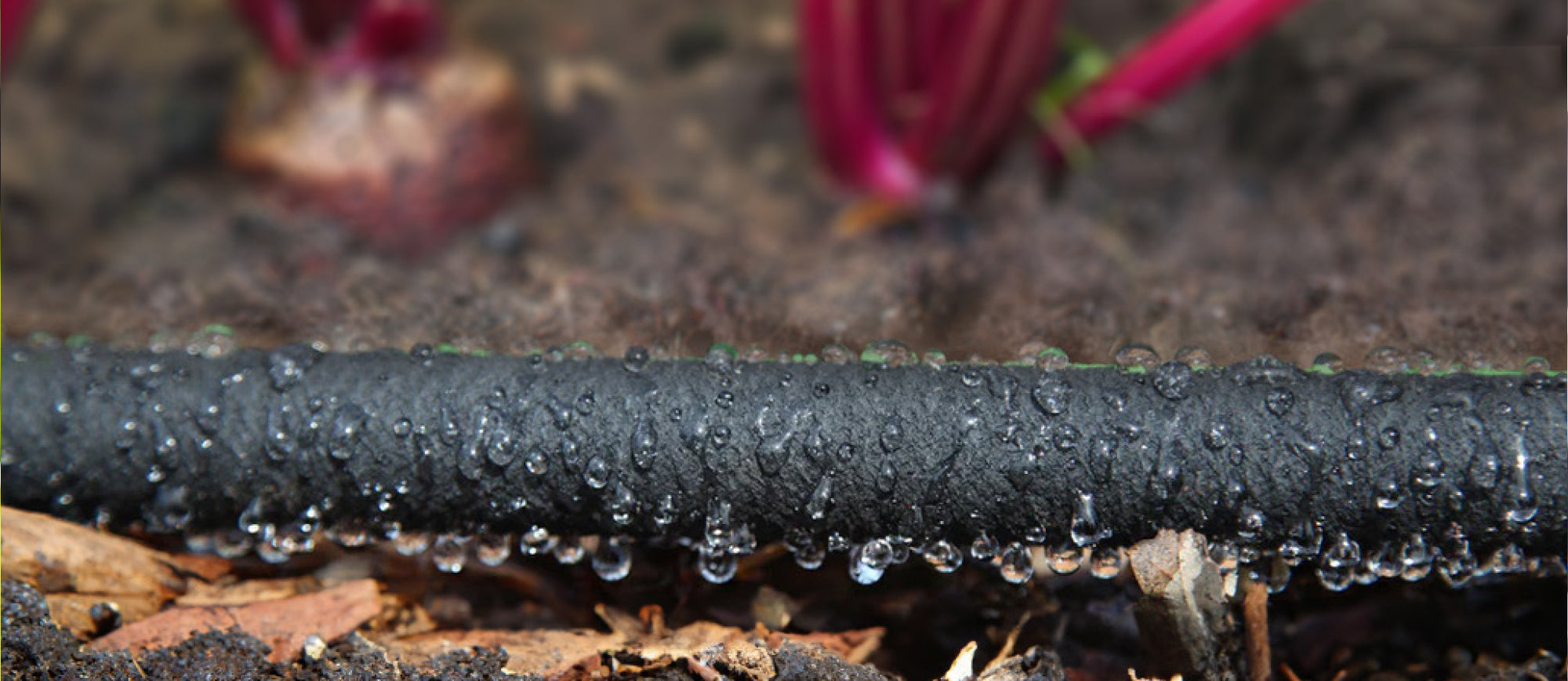
This slowly applies water for the entire length of the hose, so some areas not needing water will receive it, but far less so than with hose or overhead sprinkler irrigation. These are made from a variety of different materials. Setup is straightforward and you garner many of the benefits of drip irrigation. A couple of considerations are that these don't work as well if they are located on a slope, and they are really only suitable for a single row or bed per soaker hose.
Choosing the right watering method for your garden comes down to balancing efficiency, plant health, and the realities of your space, soil, and schedule. Whether you are hand-watering containers with a can, using a hose and wand for flexibility, covering larger areas with sprinklers, or stepping up to more efficient systems like drip or soaker hoses, the goal is the same: deliver roughly an inch of water per week (including rainfall), deeply and consistently, to the root zone, not the leaves. By checking soil moisture instead of relying on a rigid schedule, watering early in the day, and minimizing leaf wetness and soil disturbance, you'll not only conserve water but also improve nutrient uptake, especially when you're following your MySoil test recommendations. Start with the option that best fits your current setup, then consider upgrading to drip or soaker systems over time for even better efficiency, healthier plants, and higher yields. Check out our free Garden Start Guide for more information on gardening best practices and how to get started.
How Much Is "1 Inch of Water" in Gallons?
When gardeners hear "apply one inch of water per week," it can be difficult to visualize what that actually means in practice. Converting inches of water into gallons helps you better manage irrigation, especially if you're using drip systems or tracking water usage.
Here's the key conversion:
- One inch of water over 1 square foot = 0.623 gallons
- One inch of water over 100 square feet = 62.3 gallons
This means that if your garden bed is 100 square feet, you'll need about 62 gallons of water per week to meet the standard one-inch guideline.
Quick Reference for Common Garden Sizes
- 25 sq ft (small, raised bed): ~15.6 gallons per week
- 50 sq ft: ~31.2 gallons per week
- 100 sq ft: ~62.3 gallons per week
- 200 sq ft: ~124.6 gallons per week
If you're irrigating multiple beds, this can add up quickly, making efficient systems like drip irrigation even more valuable.
How to Use This in Practice
If you're using drip irrigation, you can calculate runtime based on your emitter output. For example:
- A drip emitter that delivers 1 gallon per hour (gph) would need to run for about 62 hours total emitter run time per week (Ex. 1 hour of runtime with 10, 1 gph emitters would need to run for 6.2 hours per week) to supply 100 sq ft with one inch of water
- In practice, this is split into multiple watering sessions (e.g., 2–3 times per week)
Keep in mind that:
- Rainfall should be included in your total
- Sandy soils may require more frequent watering
- Clay soils may need slower, less frequent applications
For MySoil users, this conversion becomes especially useful when dialing in irrigation alongside your soil test recommendations. Proper watering ensures nutrients stay available in the root zone rather than leaching away or becoming inaccessible due to dry soil conditions. Click Here To Go Back to The Beginning
Share:
How to Start a Mini Garden (Anywhere)