Select Your Seeding Project
Window of Opportunity
Late summer through fall is the ideal time to establish a new lawn. Here's how the work breaks down month by month.
- Remove turf
- Level yard
- Check irrigation
- Acquire seed
- Seed
- Water
- Fertilize
- Water
- Fertilize
Project Overview
Five steps take you from bare ground to an established lawn.
Premium Seed & Starter Fertilizer


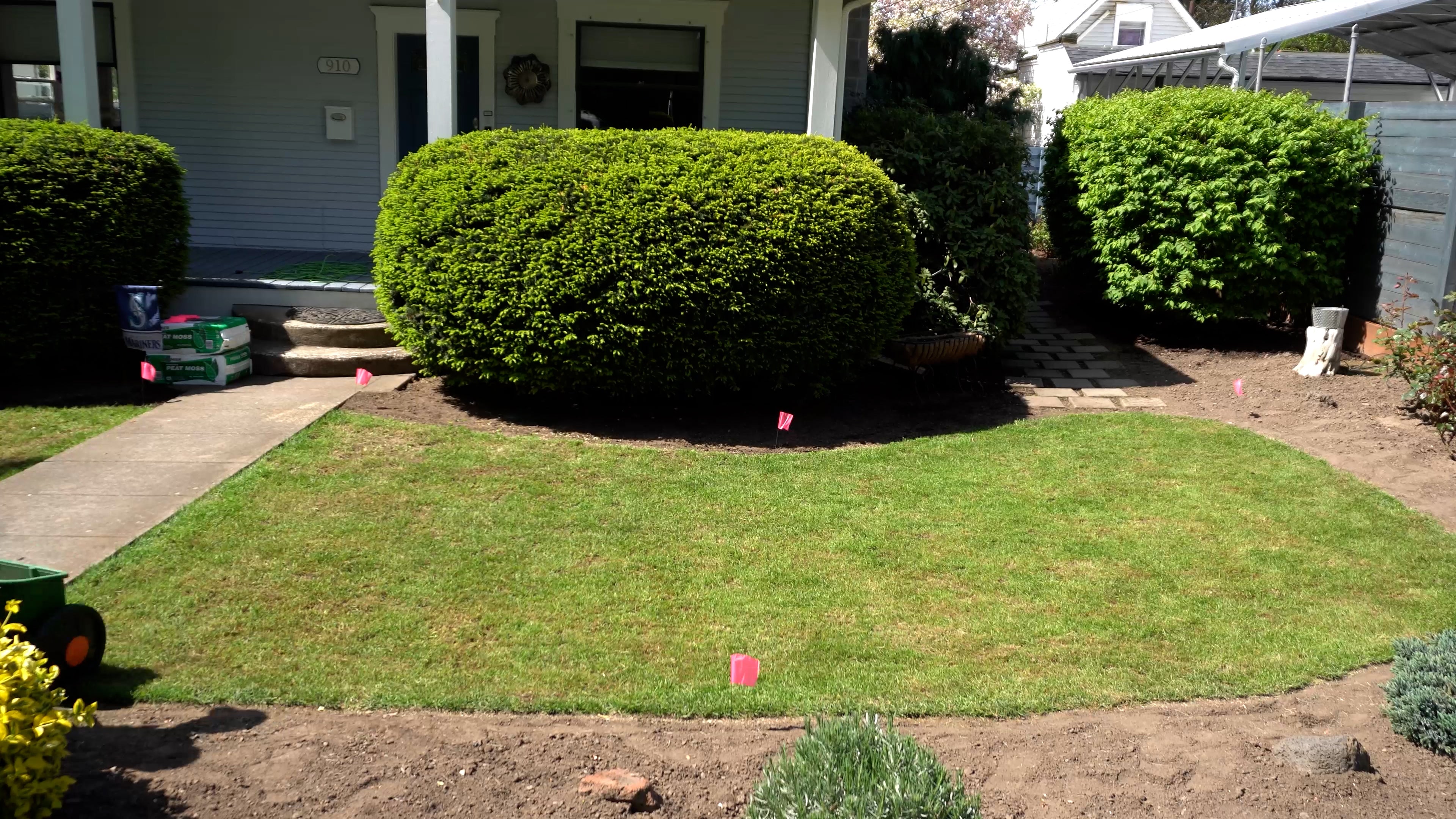
Remove Any Existing Turf & Weeds
To remove your current lawn and any weeds there are both mechanical and chemical methods that can be used, but usually, a combination of both is best.
CHEMICAL: A non-selective herbicide product can be sprayed to kill all existing grass and weeds. Always follow chemical labels and rates.
MECHANICAL: A sod-cutter can be used to remove existing turf and the top portion of the root system. If there is very little turf and weeds a rototiller can be used to disturb the top 3-4" of soil.
COMBINATION: Most often a non-selective chemical spray is used to kill existing plant matter followed by removal with a sod cutter or by rototilling in the dead plant material.

Leveling The Surface
It is important to level the soil to provide a smooth uniform surface for even germination & ease of future maintenance activities.
- Level the surface by filling in low spots using a drag, light harrow or large landscape rake.
- If the soil is very “fluffy” or loose, water the soil a bit to help compact the surface. A roller may also help. (When walking on the soil your shoes should not leave more than a 1” deep depression if possible)
- If underground irrigation is present or planned, level all heads even with the prepared soil surface.

Seeding
This is the moment you have been waiting for, but the preparation to this point was critical for a perfect lawn!
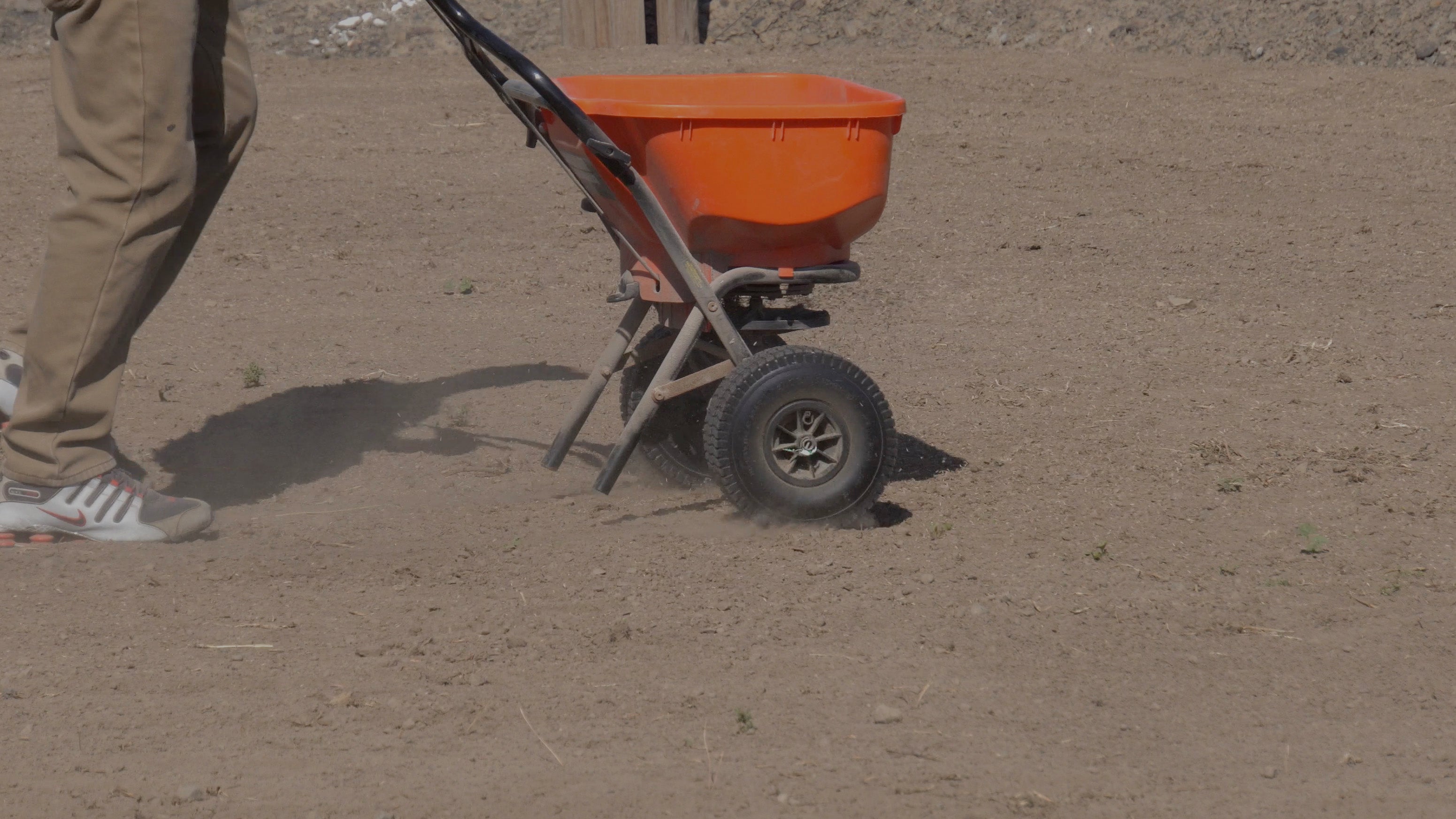
- Using a rotary or drop spreader, apply the seed in two directions. Each direction should deliver half the total rate.
- A total rate of 8-10 lbs/1000 sq. ft. (4-5 lbs per direction) is recommended.
- Once the seed is spread, lightly rake across the surface to incorporate the seed.
- Irrigate once seeded and avoid puddling, which can move the seed.

Amend The Soil
Proper fertility and pH will ensure your new lawn grows-in quickly & evenly with great color & density!
- Purchase a MySoil Test Kit to provide exact fertilizer & soil pH recommendations prior to seeding.
- After properly applying amendments to your soil, lightly incorporate by dragging a metal spring leaf-rake over the surface with some pressure, followed by an irrigation cycle.
- Do not apply Weed & Feed type products containing herbicides prior to planting.

Continued Maintenance
Irrigate 2-3 times per day for 5-15 minutes each time. (Keep the seed and soil moist at all times for the best germination. Do not allow water to puddle.)
The Ryegrass will germinate first, followed by the Bluegrass in another week or so.
Your first mow can occur with a light push mower when the grass reaches about 3.5-4” tall.
Look to fertilize again after your first mowing following your MySoil Test recommendations.

Window of Opportunity
Late summer through fall is the ideal time to overseed an existing lawn. Here's how the work breaks down month by month.
- Acquire seed
- Scalp
- Thatch
- Seed
- Water
- Water
- Fertilize
Project Overview
Five steps take you from bare ground to an established lawn.
Premium Seed & Starter Fertilizer
Amend Soil pH
- Let your nitrogen levels drop slightly prior to overseeding your lawn. This allows the new seed to germinate and grow without being “out-competed” for sunlight, water & nutrients by the existing turf stand.
- Use a MySoil Test Kit to guide any required fertility and pH adjustments. pH adjustments should be made prior to seeding. Nitrogen will be applied about 7–10 days after seeding to promote new seedling growth.

Reduce Existing Turf & Expose Soil
- Scalp your lawn down by mowing at 2” or less if possible and remove clippings. This will expose more soil for the seed to contact. More dense lawns may require thatching in multiple directions with debris removal to expose the soil surface. Aggressive thatching can also leave small slices in the soil for the seed to fall into.
- For best results, once turf is thinned, an aerifier can be used to make holes no more than ½” deep, so that some seed can fall-in.

Seeding
This is the moment you have been waiting for, but the preparation to this point was critical for a perfect lawn!
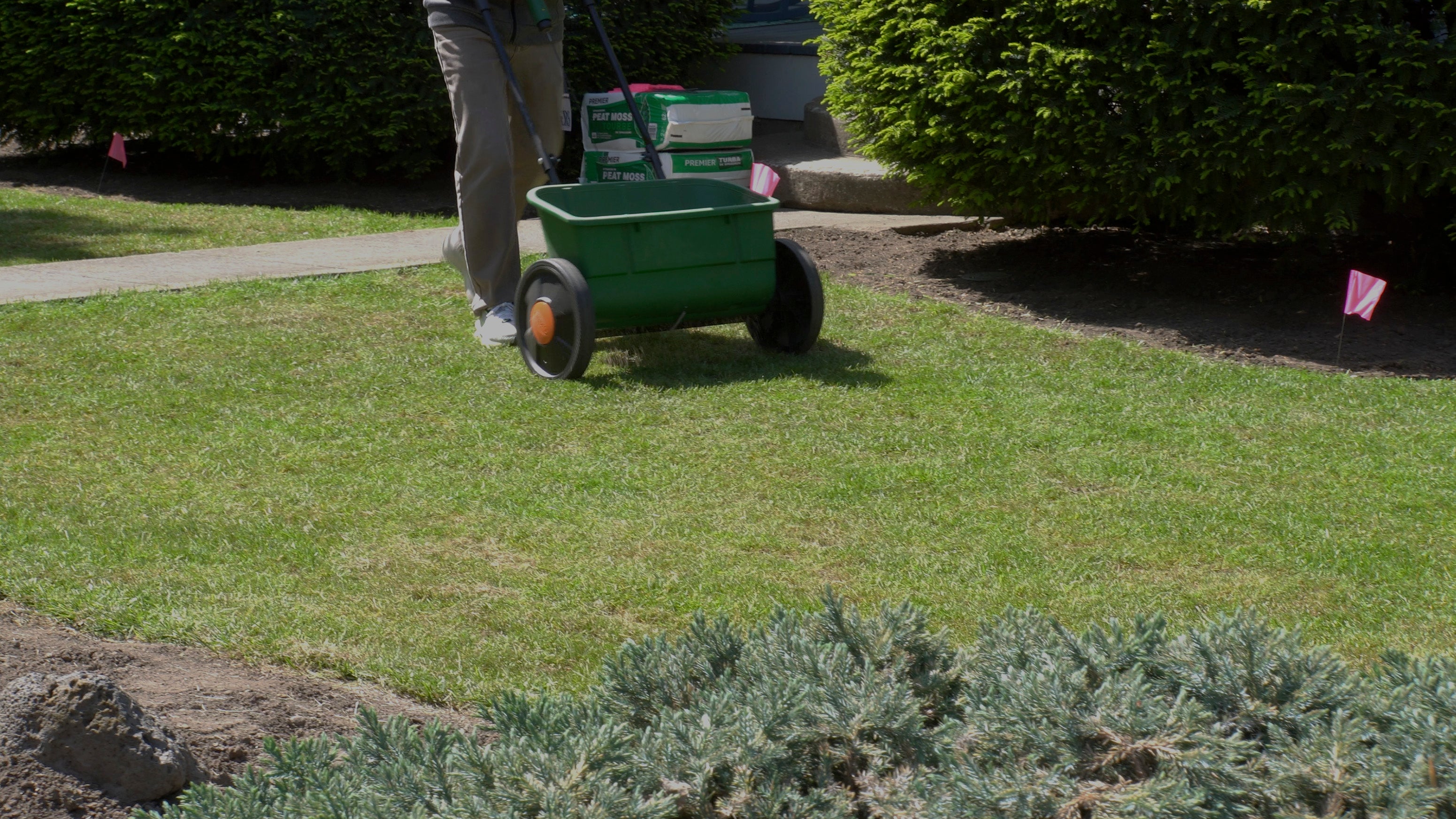
- Using a rotary or drop spreader, apply the seed in two directions. Each direction should deliver half the total rate.
- A total rate of 5-8 lbs/1000 sq. ft. (2.5-4
lbs perdirection) is recommended. (Spreaders are often ¾ to all the way open to deliver these rates) - Irrigate after seeding to help the seed establish contact with the soil.

Continued Maintenance
If possible, irrigate 2-3 times per day for 5-10 minutes each time. (Keep the seed and soil moist at all times for the best germination.
- The Ryegrass will germinate first, followed by the Bluegrass in another week or so.
- Look to fertilize 7-10 days after seeding following your MySoil Test recommendations. New seedlings should be about 1-2” tall. Do not apply Weed & Feed type products containing herbicides 3-4 weeks prior to and after seeding.
- If possible, wait 10-14 days to begin regular mowing practices.