
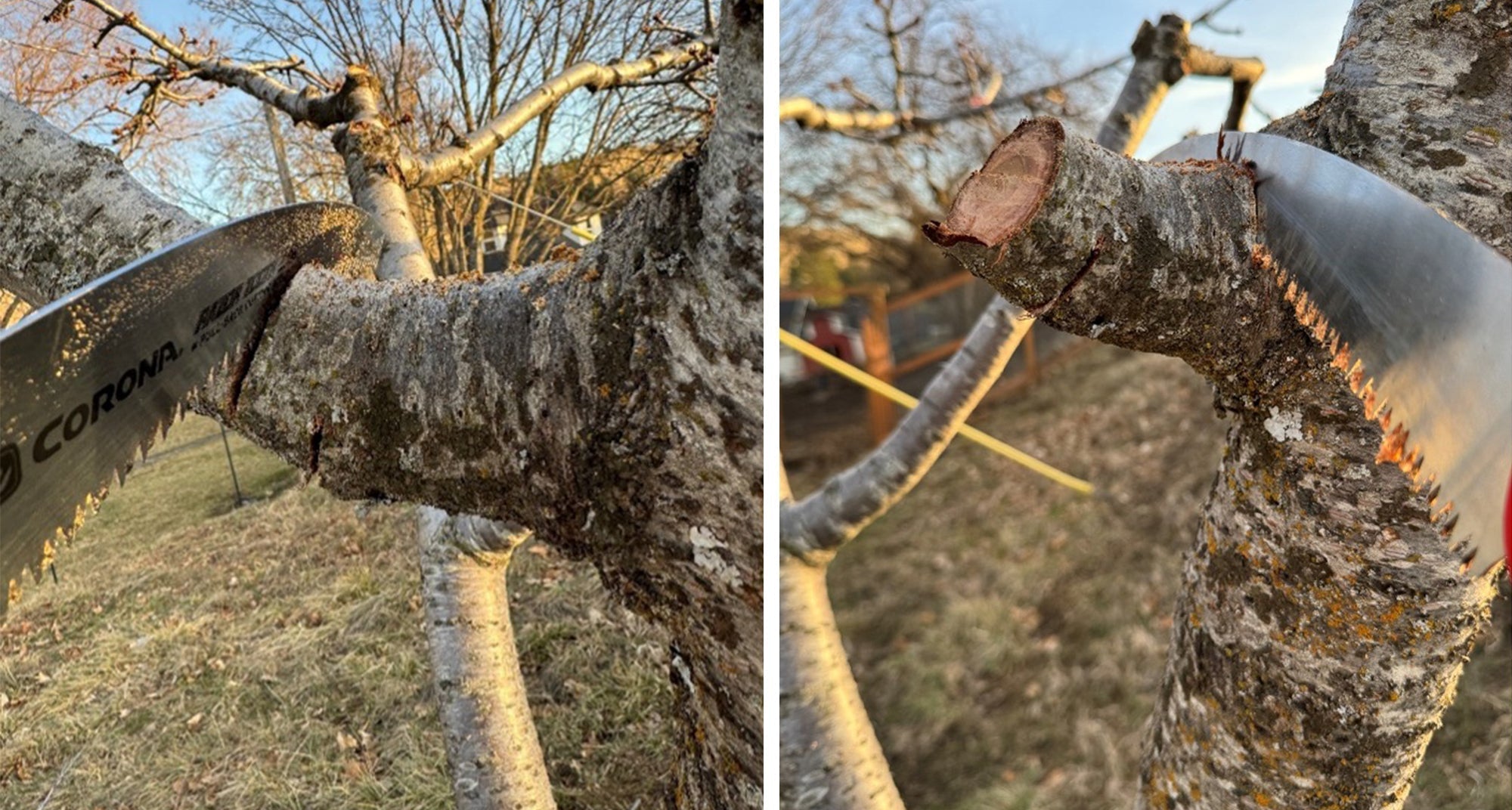
Most fruit trees and caneberries (think blackberries and raspberries) are pruned during winter dormancy, but the real key is knowing the signals from your trees and berries that it’s time to cut. This article walks through when to prune apples, cherries, pears, peaches, plums, blackberries, and raspberries so home growers can time pruning with plant biology for healthier plants and better harvests.
Don’t know how to prune or where to get started? Download the Free Pruning Basics Guide!
Fruit trees and caneberries respond differently depending on whether they are pruned while dormant (no leaves) or in active growth. Dormant pruning generally pushes strong new growth, while summer pruning calms overly vigorous plants and fine-tunes size and light levels.
· Late winter to very early spring, just before budbreak, is prime pruning time for most apples, pears, plums, and tart cherries.
· Cold-tender trees like peaches and some sweet cherries are best pruned a bit later in winter or very early spring to reduce cold injury risk.
· Blackberries and raspberries need both summer cuts (removing fruited canes and tipping new shoots) and winter cuts (shortening laterals and thinning canes).
How to know a tree needs pruning
Beyond the calendar, your trees will show clear signs that they are ready for a structural or cleanup prune. Watching for these makes pruning more responsive and helps prevent disease and breakage.
Common signs a fruit tree needs pruning include:
· Dead, diseased, or damaged branches that are brittle, cracked, or leafless while the rest of the tree is alive.
· Branches that cross, rub, or grow back toward the center, which wear away bark and invite pests and infections.
· Vigorous vertical shoots (water sprouts) in the canopy or suckers from the base that rob energy from fruiting wood.
· Overgrown canopy that shades interior branches, leads to poor fruit color, or reduces flower/fruit production.

When to prune apples, pears, cherries, peaches, and plums
Most pruning for these fruit trees happens once per year, with occasional summer touch-ups to remove problem growth. Fine-tuning timing to species helps manage cold injury risk and growth vigor.
Apples and pears are hardy and respond well to dormant-season pruning, which encourages strong spring growth and good fruiting wood.
· Best timing: Late winter through early spring, during dormancy but before budbreak (often February–early April in many temperate regions).
· Avoid: Very early winter pruning, which can reduce winter hardiness and increase cold damage risk.
· Summer exceptions: Light summer thinning cuts are fine if you need to reduce height or remove water sprouts, but heavy summer pruning can reduce fruiting and expose fruit to sunburn.
Cherries are somewhat more disease- and crack-prone, so timing pruning to drier weather and avoiding the coldest periods is helpful.
· Tart cherries: Often pruned with apples and pears in late winter to early spring while dormant.
· Sweet cherries: More cold tender; many growers wait until late winter, close to bud swell, or prune just after bloom in spring to limit cold injury.
· Disease awareness: Avoid heavy cuts during wet periods, and in apples and related species, avoid pruning right during blossom time where fire blight is a concern.
Peaches are among the most cold-sensitive common fruit trees, and pruning too early in winter can worsen cold injury.
· Best timing: Late winter to very early spring, as late as practical before or around bud swell, once the worst cold is past.
· Why late: Pruning slightly reduces winter hardiness, so waiting reduces the chance that a cold snap will damage newly exposed tissue.
· Growing season shaping: Light summer pruning can help open the canopy and keep trees manageable but avoid severe cuts that remove too much leaf area.
Plums are often grouped with other hardy fruit trees but may be handled like peaches in colder climates to reduce winter damage.
· Best timing: Late winter or early spring, while trees are still dormant but close to budbreak.
· Strategy: Focus dormant pruning on dead, diseased, and crossing wood plus opening the center for light and airflow.
· Summer tweaks: Light summer pruning can be used to check vigor and refine shape, especially if the tree has been neglected in past years.
When to prune blackberries and raspberries
Blackberries and raspberries are caneberries: canes grow one year, then fruit and die the next (floricanes), or fruit in their first year (primocane types). Knowing which type you grow helps you decide what to remove and when.
Key timing principles for caneberries:
· Immediately after harvest, remove canes that fruited (floricanes) down to the ground.
· In summer, “tip” or head new primocanes to encourage branching and keep plants at a workable height.
· In late winter, shorten lateral branches and thin crowded canes while plants are dormant.
Blackberries need pruning several times per year, especially floricane-fruiting types.
· Summer (active season): Head tall new primocanes by cutting or pinching tops to control height and stimulate lateral branches that will carry fruit.
· Just after harvest: Cut all fruited canes to ground level as soon as you can after they finish fruiting, since they will naturally die back and can harbor disease.
· Late winter: Shorten lateral branches to about 12–18 inches on strong blackberry canes and remove weak or excess canes, leaving a manageable number per foot of row.
Raspberries are handled similarly, but lateral branches are usually kept a bit shorter than in blackberries.
· Summer-fruiting raspberries: After harvest, remove all fruited floricanes at ground level, keeping only strong new primocanes for next year’s crop.
· Late winter: Prune lateral branches back to about 8–10 inches and thin crowded canes, leaving robust, well-spaced canes.
· Primocane (fall-bearing) raspberries: Many growers simply mow or cut all canes to ground level once a year during winter for a single late-season crop, simplifying management.
Putting it into practice in your yard
For home gardeners, matching pruning timing to both species and local climate gives the best results. In colder areas, late winter pruning once the worst freezes pass is often ideal, while in warmer regions, the window can extend a bit earlier.
Practical steps each year:
· Walk your fruit trees and berries a few times through winter, looking for dead, damaged, or crossing branches and marking what needs removal.
· Time main pruning for the dormant window recommended for each crop, then use light summer cuts for cleanup, height control, and removal of suckers and water sprouts.
· For caneberries, remember the rule: fruiting canes are disposable; new canes are next year’s crop, and both need annual attention.
Healthy pruning starts with healthy soil, so pairing these timing guidelines with a soil test and proper fertility helps trees and berries rebound quickly and set strong new fruiting wood.
If you’re wondering if you have all the tools needed, Download the Free Pruning Basics Guide!
Share:
Tree Pruning Basics Guide