
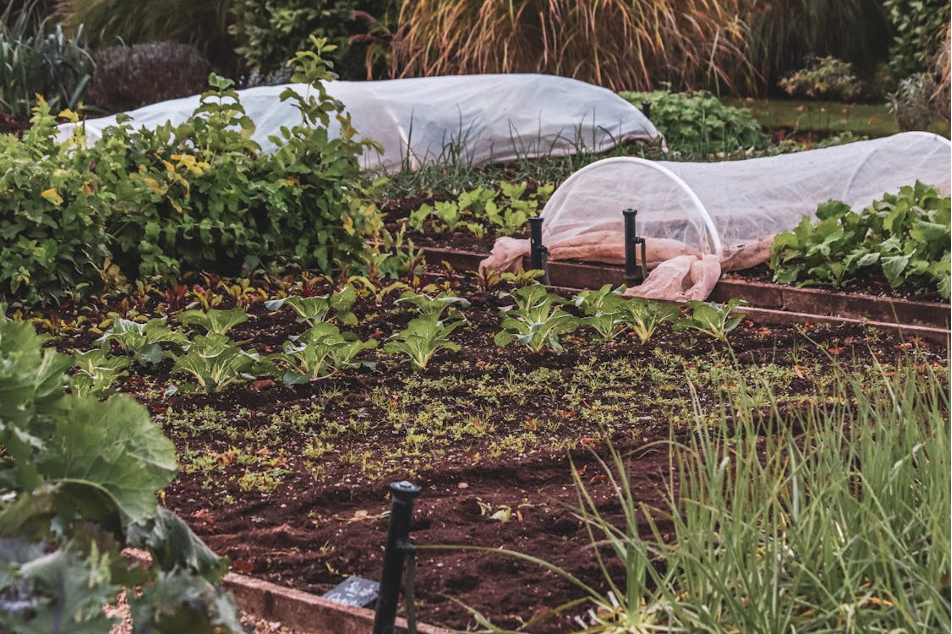
Frost can harm garden plants through freezing and thawing of cells or by causing ice crystals to form inside plant cells disrupting fluid movement, think of this like pipes bursting in your house during a hard freeze. Damaged plants may look like they are wilting or have browning or blackening of leaves. Fortunately, there are a few simple ways to keep your plants safe.
1. Cover Plants Before Nightfall
Use breathable materials such as frost cloth, burlap, bed sheets, or dedicated garden fleece to trap heat radiating from the soil overnight. Avoid plastic unless it’s propped up so it doesn’t touch leaves directly. Early evening covering is most effective.

2. Water the Soil Before a Cold Snap
Moist soil retains heat better than dry soil. A deep watering a day before frost can stabilize soil temperatures and help prevent plant roots from freezing solid. Plant roots in particular can be quite sensitive to sudden freezes.

A light blanket of mulch, such as shredded leaves, pine needles, or straw, insulates roots and helps prevent freeze-thaw cycles from lifting plants out of the ground. Keep mulch a few inches from stems to prevent rot.

Container plants, especially tropicals or young seedlings, should be moved into a sheltered space such as a garage, shed, or inside your home when temperatures dip below freezing.
When the frost thaws, avoid raking or pruning immediately as the plant tissues are still delicate. Wait for temperatures to stabilize before gently cleaning up or trimming damaged foliage. If damage does occur, give your garden a slow-release feeding guided by your MySoil test and allow time for natural recovery.
Frost is unavoidable, but damage doesn’t have to be inevitable. The simplest prevention method? Cover your garden before temperatures dip overnight, water, or add mulch. With a few mindful steps and seasonal awareness, your garden will emerge from winter healthy, hydrated, and ready for spring growth and planting.
Soil health starts from the ground up, and the secret to a thriving spring garden begins with fall soil sampling using a MySoil test kit. Testing your soil in autumn gives you a complete picture of nutrient levels and pH, allowing you to address deficiencies before winter sets in and ensuring your garden is primed for robust spring growth. When you sample in the fall, you’re taking a proactive approach—giving amendments time to work so your plants get the best possible start come planting season.
With the easy, step-by-step MySoil kit, homeowners can collect accurate samples from lawns, vegetable gardens, or flower beds, then receive expert analysis and tailored fertilizer recommendations for their specific needs. This empowers you to make smarter decisions and avoid guesswork, meaning healthier soil and more beautiful, productive gardens year after year.
Share:
Why Soil Test In The Fall?
Developing a Raised Bed Garden Plan for the Season