
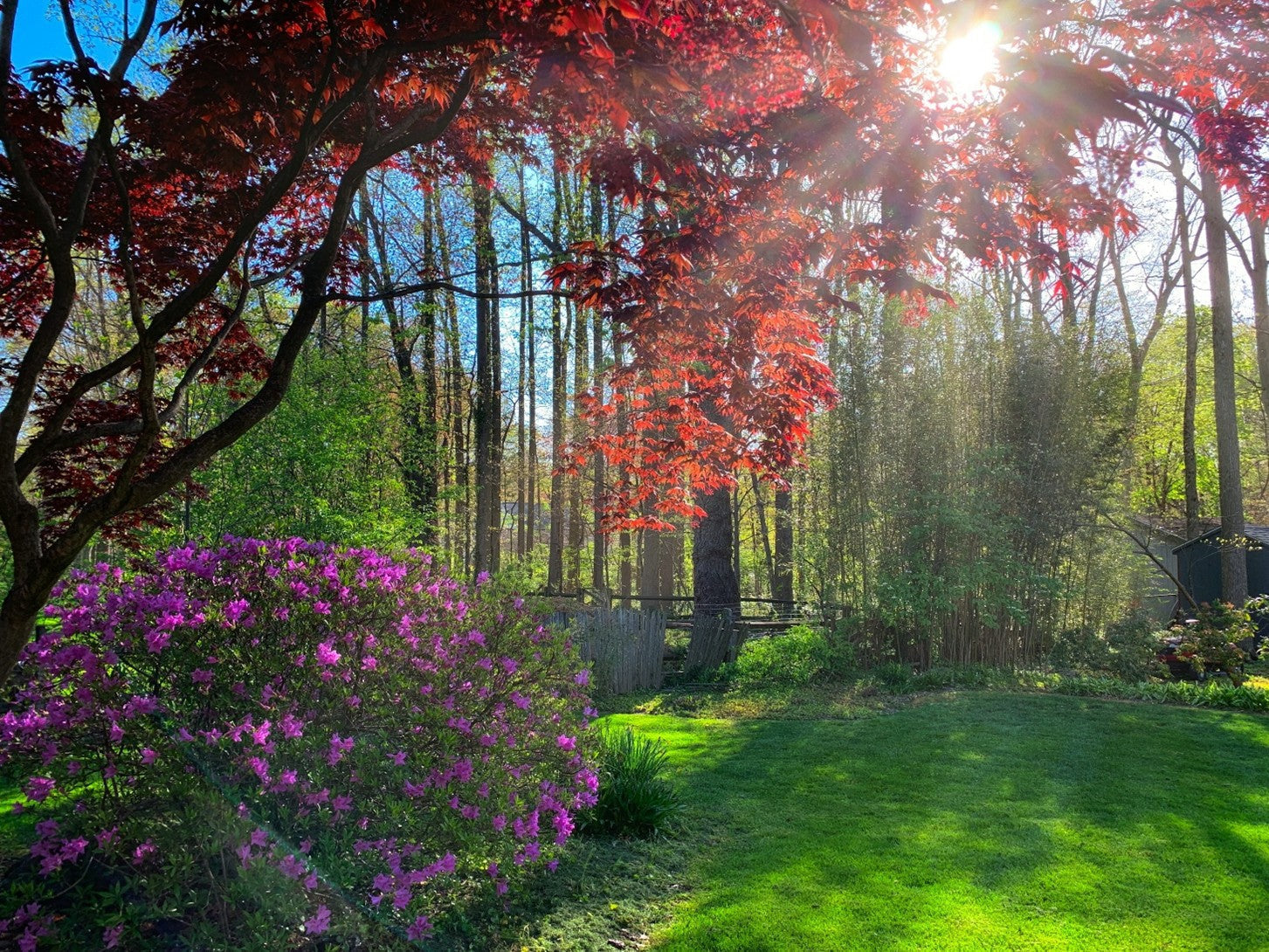


1) What soil and pH do they need?
- All three prefer acidic, well-drained soil: blueberries about pH 4.0–5.5; azaleas and rhododendrons generally 4.5–6.0.
- To lower pH, use elemental sulfur, acid-forming fertilizers such as those containing ammonium sulfate, and organic mulches like pine bark or needles; avoid planting in heavy, poorly drained clay without soil preparation, raised beds, or container plantings.
Tip for MySoilTesting users: Test pH before planting and annually in spring or fall; adjust in small increments and retest to confirm and track pH changes.

2) How much sun or shade is best?
- Blueberries: full sun to part sun for best fruiting, with protection from intense late-afternoon heat in hot climates.
- Azaleas and many rhododendrons: partial shade or filtered light; too much shade reduces blooms, while strong afternoon sun can scorch leaves.
Microclimate note: Morning sun with afternoon shade is a common sweet spot for blooms and leaf health.
3) How should I water them?
- Keep soil consistently moist but not waterlogged; these plants dislike “wet feet.” Deep, infrequent watering encourages stronger roots. Use a soil probe to check soil moisture to ensure the soil doesn’t dry down too far between these deep irrigation cycles.
- Overwatering and poor drainage cause root stress and disease; prioritize drainage and mulch to stabilize moisture and temperature.
Irrigation cue: During establishment, check the top 2–3 inches; water when it’s beginning to dry, not bone-dry or soggy.
4) What fertilizer and when?
- Use fertilizers recommended by your soil test; apply at recommended rate in spring and, for azaleas/rhododendrons, soon after flowering if needed; avoid high amounts of late-season nitrogen.
- Blueberries benefit from modest nitrogen; overfertilizing azaleas/rhododendrons risks burn and excess growth at the expense of blooms.
Pro move: Pair nutrient plans with soil test results to target N-P-K and sulfur needs precisely.
5) When and how to prune?
- Blueberries: prune during late winter dormancy to remove weak wood, open the center, and maintain productive canes.
- Azaleas and rhododendrons: prune right after flowering to avoid cutting off next year’s flower buds; light shaping beats heavy cuts ten times out of ten.
Rejuvenation: For leggy shrubs, gradual multi-year thinning is safer than severe one-time cuts.
6) Do I need more than one plant?
- Blueberries: multiple compatible varieties improve yields and berry size even with self-fertile types. Plant as many plants as your space and appetite can handle.
- Azaleas/rhododendrons: focus on spacing for mature size and grouping for landscape impact rather than cross-pollination needs.
Layout tip: Staggered groupings enhance bloom display and airflow.
7) Can they grow in containers or raised beds?
- Blueberries perform well in containers or raised beds where pH and drainage are easier to control; use an acidic, coarse, well-aerated mix and ensure that your container is appropriately sized.
- Azaleas/rhododendrons also do well in containers with ericaceous mixes, those soil mixes designed for acid loving plants; ensure excellent drainage and regular monitoring of moisture and pH.
Container care: Refresh top mix and mulch annually; monitor pH drift with periodic or annual soil testing.
8) Why are leaves yellowing (chlorosis)?
- Interveinal chlorosis typically signals high soil pH or nutrient unavailability in acid-loving plants. Use a MySoil test to diagnose if this becomes a problem.
- Rule out overwatering or root issues; correct pH first, then address specific nutrient needs based on a soil test.
Fast diagnostic path: Test pH, inspect drainage, then consider iron or nitrogen adjustments if pH is in range. 
9) When is the best time to plant?
- Plant in early spring in cold climates; plant in fall where winters are mild, so roots establish before summer heat.
- Container-grown plants can be planted outside extreme heat, drought, or freeze conditions, with diligent aftercare.
Site prep first: Amend and check drainage and pH before planting day for smoother establishment.
10) Which varieties should I choose?
- Blueberries: match type to climate and chilling hours (e.g., highbush, rabbiteye, lowbush) and combine compatible cultivars for better yields. We suggest working with a knowledgeable local nursery to find the cultivars that are most successful in your specific area.
- Azaleas/rhododendrons: select for your USDA zone, sun tolerance, mature size, and evergreen vs. deciduous traits. Again, we recommend working with a local nursery to ensure success.
Right plant, right place: Compact, heat-tolerant selections help in small or hot sites; cold-hardy choices matter in northern zones.
Quick checklist: Set up for success
- Test soil pH before planting and yearly; aim for the acidic ranges listed above.
- Prioritize drainage, raised beds, or containers for heavy soils.
- Mulch 2–3 inches with pine bark/needles; keep mulch off stems.
- Water deeply, avoid waterlogging, check moisture with soil probe, and adjust with weather.
- Fertilize as recommended during at the right seasonal windows.
- Prune at species-appropriate times to preserve blooms and productivity.
Share: